Ms. Rachel: The Educator They Could Not Silence
Evidence-first pattern recognition. Sourced to reputable reporting.
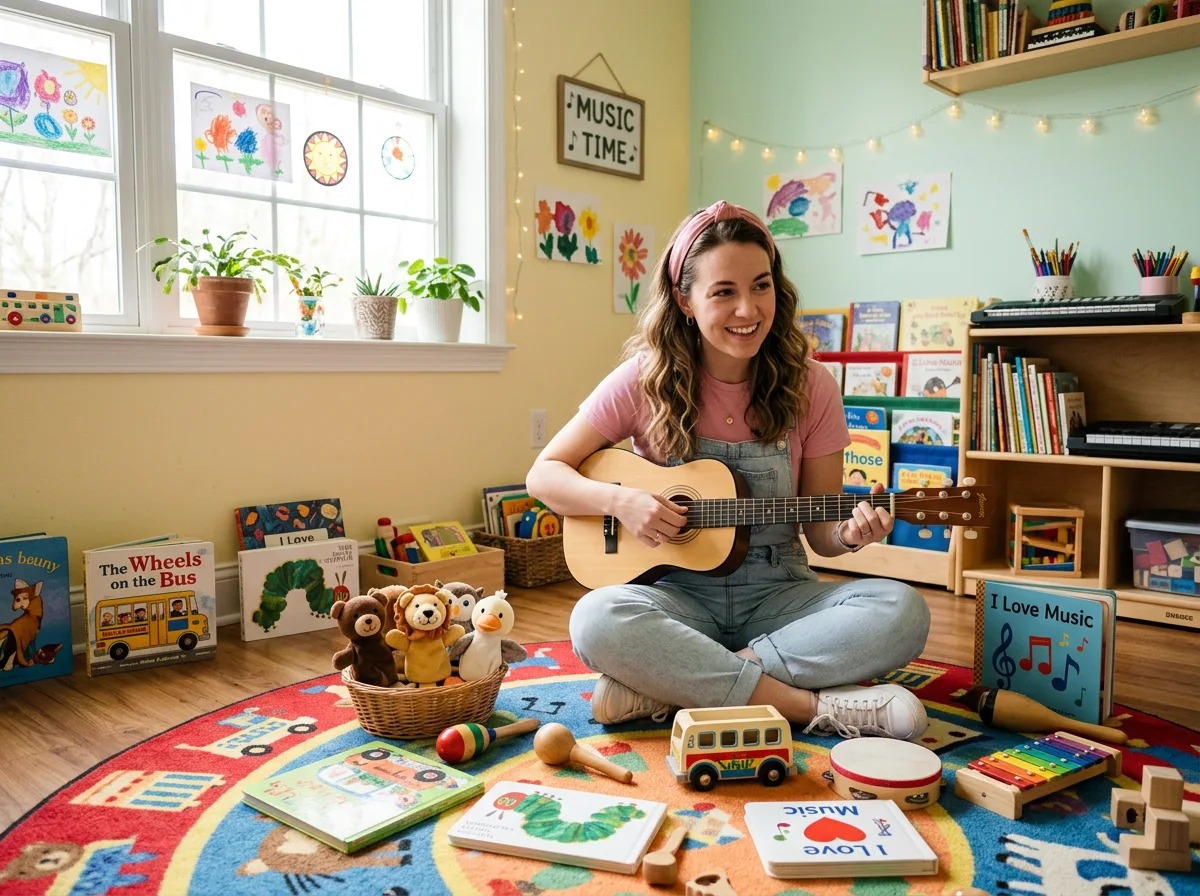
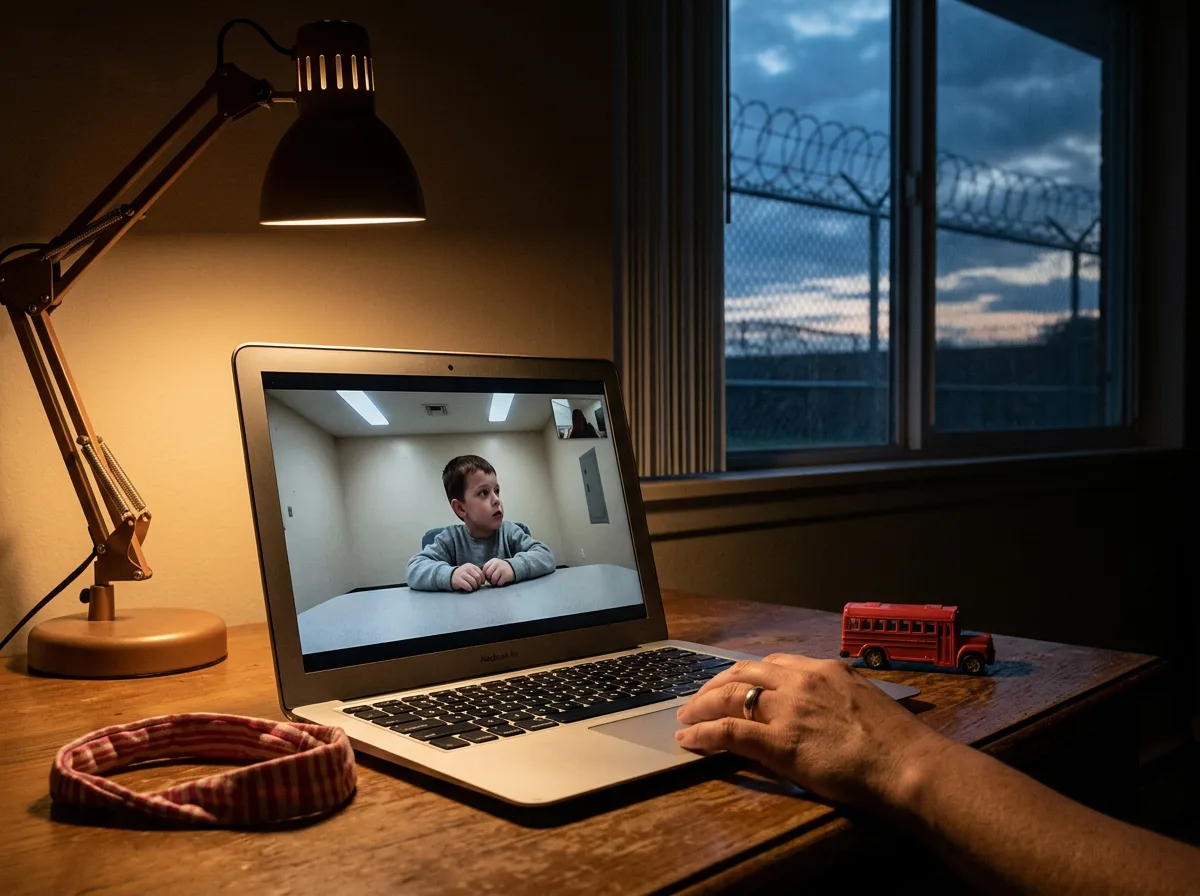
Rachel Accurso. Two master's degrees in childhood development. A woman who sang Wheels on the Bus to a five-year-old the state had silenced, and refused to stop.
This profile discusses children in immigration detention, child neglect, and threats against a family.
If this content may be triggering, skip to recovery resources →
The Pattern
The song
For six years, Rachel Accurso sang “Wheels on the Bus” to toddlers. It is one of the first songs in her catalog, and it does what all her songs do: it invites a child to make a sound and waits for them to make it. The wheels go round and round. The child hums, then sings, then laughs. That is the whole method. A voice reaches out, and a voice comes back.
In March 2026, she sang it to a 5-year-old boy who could not speak.
His name was Gael. He is nonverbal and was being assessed for autism. He and his parents had been detained at a routine immigration check-in in El Paso and sent to the Dilley Immigration Processing Center in South Texas. In detention, his severe constipation had spiraled. His mother told Accurso he had not defecated in nine days. His stomach was visibly distended. He gagged when he tried to eat. He had begun hitting himself, a behavior his parents had never seen.
Accurso slipped into character on the video call. She sang “Wheels on the Bus.” She held up a toy. She talked to him about trains. He was restless and overwhelmed.
She told NBC News: “Treating a child this way is a crime. It’s neglect and child abuse.”
The song is designed to reach a child who will not speak. That night it was sung to a child the state had silenced. Same song. Different room.
The spelling bee
On the same calls, Accurso spoke to a 9-year-old boy named Deiver Henao Jimenez. He told her he did not want to be there anymore. Nothing was good there. The food made his stomach hurt. The lights never turned off. He missed his friends.
But what he wanted most was to leave and go to the spelling bee.
Before his family was detained, Deiver had won his school spelling bee in Las Cruces, New Mexico. He placed third at regionals. He had a spot at the state competition in May. He was proud.
The woman on the screen wore a pink headband. Her voice was warm and high-pitched, familiar to millions of children. She leaned toward the camera.
“You have a real gift for spelling,” she said. “You’re so smart.”
Then her smile faltered.
“We’re trying to get a child out of a jail to do a spelling bee,” she told NBC News. “I just never thought those words would go together.”
Her name is Rachel Accurso. The world knows her as Ms. Rachel.
The origin
The whole thing started because her own son would not talk.
Rachel Anne Griffin grew up in Maine and studied music. She earned a master’s in music education from NYU and taught music at a preschool in New York City, then completed a second master’s in early childhood development. In 2016 she married Aron Accurso, a Broadway music director and composer. In 2018 they had a son, Thomas. Thomas had a speech delay.
“My son inspired the whole thing,” she told News Centre Maine. “He had a speech delay and I thought it would be great if there was a show that was slow paced and interactive, and used some of the tactics that his speech therapist was using to get him talking.”
She launched her YouTube channel in 2019. She and Aron built it with a team of educators and developmental experts. The videos were simple: songs, repetition, hand movements, sign language. The signature look was a pink T-shirt, denim overalls, and a pink headband.
“We thought maybe we would help a few kids,” she said.
Six years later: 15.3 million subscribers. Billions of views. A Netflix series that reached number nine in the first half of 2026 with 37.3 million views. A merchandise line. A second child, Susannah, born via surrogate in 2025.
She did not set out to be a moral witness. She set out to help her son talk.
What else she built
The classroom grew into a body of work. She is the author of several children’s books with Penguin Random House, including Ms. Rachel and the Special Surprise! (2024), a board book built around the same speech-and-play method as her videos, and Ms Rachel: 100 First Words. Her series won a Streamy Award for best program in the kids and family category.
She is an ambassador for Save the Children US. In May 2024, she sold personalized Cameo videos and donated every dollar, raising $50,000 in a few hours for children in Gaza, Sudan, and Ukraine. She is helping build a community center in Sudan with SAPA Global. She performs with her sister Rebecca in a band called the Sisteristics.
None of this is the controversy. It is the work. The controversy is what happened when the work refused to stop at the border.
The lineage
She grew up on Mister Rogers’ Neighborhood, and she names Fred Rogers as her hero. The Washington Post put the connection plainly: “Just like Fred Rogers, she doesn’t talk down to kids. She talks to children as they should be talked to. Respectfully.”
The lineage is not a compliment. It is a job description.
In 1969, Fred Rogers, a Presbyterian minister and a children’s television host, testified before the United States Senate to defend public television funding. The committee chairman, John Pastore, was known for his impatience. Rogers spoke softly. He quoted a child’s letter. Pastore said: “I think it’s wonderful. Looks like you just earned the twenty million dollars.”
Rogers did not shout. He did not perform outrage. He made the room see a child.
Fifty-seven years later, a children’s television host went to Washington to ask Congress to see children held in a detention center in South Texas. She, too, was dismissed as “just” a kids’ entertainer. She, too, spoke softly and made the room see a child.
When NBC News asked why she kept speaking despite the threats, she said she kept coming back to Rogers, “who used his platform to speak out on behalf of children.”
NYC Comptroller Brad Lander called her “Mr. Rogers but with a steel spine.”
What she believes
Her philosophy fits in one sentence. The hard part is not saying it. It is refusing to stop saying it.
“I see all children as precious and equal.”
At the Glamour Women of the Year Awards in November 2025, she said: “My love and care for children doesn’t stop at my own children. It doesn’t stop at the children in our country. It embraces every child of the world. I don’t think that our love should end at religion or skin color or where people are born.”
On Democracy Now in August 2025, she said she would “refuse to work with anyone who has not spoken up about the humanitarian catastrophe in Gaza.”
To NBC in March 2026: “I am political. It’s political to believe that children are worthy of love and care, and that every child is equal, and that our care shouldn’t stop at what we look like, our family, at our religion, at a border.”
She has not shifted. She has not moderated. She has not added caveats. The sentence is the same in every register, at every scale, under every pressure.
The cost
The machine came for her in April 2025. StopAntisemitism named her an antisemite. The evidence: she posted images of starving children in Gaza. They asked the DOJ to investigate her as a foreign agent. No payment. No contract. No evidence of coordination.
By December 2025, the threats had forced her to hire security. In an Instagram statement, she wrote: “Remembering my son accidentally overhearing us talking about my safety and then him crying wanting to hold my hand all night scared something would happen to me.” She added: “This has taken such a toll on me and my family and all I’ve wanted was to help kids.”
She told Zeteo in May 2025: “It’s sad that people try to make it controversial when you speak out for children that are facing immeasurable suffering. I think it should be controversial to not say anything.” And: “Silence wasn’t a choice for me.”
In January 2026, she accidentally liked an antisemitic Instagram comment while trying to delete it. She posted a tearful apology. The machine did not accept the apology. The New York Post ran the story. The Combat Antisemitism Movement amplified it. Jewish groups urged NYC Mayor Mamdani to cut ties with her.
She told NBC she initially hesitated to speak about ICE detention because the Gaza advocacy had already brought threats against her family. She worried it would “inflame the situation.”
Then she video-called Deiver. Then she video-called Gael. Then she went to Washington.
The dress
At the Glamour Women of the Year ceremony at The Plaza in November 2025, Ms. Rachel wore an upcycled gown. The embroidery on the capelet and train was drawn from artwork sent to her by children in Gaza.
She named each child who contributed. She ended with the words of a girl named Rama, who lost both her sisters:
“I want to tell the world my sisters are not numbers. They are moons. They are like the stars. They shine and sparkle.”
The room stood.
She also said: “No matter how hard some people try to convince us that empathy is wrong, it’s right. No matter how hard people try to convince us that diversity is a weakness, it’s a strength. No matter how hard people try to convince us that love is limited, it’s limitless.”
The escalation
The timeline is the argument:
- 2019: Launches YouTube channel to help her son talk.
- 2024: Posts about children in Gaza. The machine notices.
- April 2025: StopAntisemitism names her an antisemite. Asks the DOJ to investigate.
- May 2025: NPR, PBS, Democracy Now cover the targeting. She does not retreat.
- August 2025: Tells Democracy Now she will “refuse to work with anyone who has not spoken up about the humanitarian catastrophe in Gaza.”
- November 2025: Glamour Women of the Year. The dress. Rama’s words.
- December 2025: Netflix series announced. Her Instagram post reaches 325,000 likes.
- January 2026: Netflix series premieres. Reaches number nine. The Instagram like incident. The tearful apology. The machine does not stop.
- March 2026: Video-calls detained children at Dilley. Declares “I am political.” Begins working to close the facility.
- June 2026: Goes to Washington to lobby Congress.
- July 2026: NY Post runs two articles framing her $3,000 to $3,500 in political donations as scandal.
Each attack produced a larger response. Each attempt to silence produced a louder statement. The machine’s theory of change was fear. The actual result was the opposite of fear.
She did not become more extreme. She became more specific. “I see all children as precious and equal” became “We’re trying to get a child out of a jail to do a spelling bee.”
What she is
She is not a geopolitical analyst. She is not a foreign agent. She is not an antisemite. She is a woman with two master’s degrees in childhood development who made a show for toddlers because her son could not talk.
She is a woman who sang “Wheels on the Bus” to a nonverbal 5-year-old in a detention center while his mother described his distended stomach.
She is a woman who wore a dress embroidered with drawings from children in a war zone and quoted a girl who lost her sisters.
She is a woman who said “I am political” and meant: I will not pretend that a child in a cage is not my concern because the child is not mine, not here, not the right religion, not the right color.
The machine read the song as a weapon. It is not a weapon. It is an invitation. Six years of teaching children to talk, and one night a song for a child the state had silenced. The wheels go round and round. That is the whole song. It does not stop.
How to support her
If this profile leaves you wanting to do something, here are the direct channels:
- Send her a letter of support. Jews for Racial & Economic Justice runs a “We’ve Got Your Back” campaign collecting messages for her, written by Jews who say the attacks on her are carried out in their name and without their consent.
- Support the legal fight. CAIR-Chicago’s class action lawsuit against StopAntisemitism and Canary Mission challenges the blacklist architecture documented in the companion piece.
- Give to her charity. She is an ambassador for Save the Children US, the organization her $50,000 Cameo fundraiser supported.
- Buy the work, not the merch of the controversy. Her books and her official site are the direct channels. Viewership and readership are the signal the machine cannot fake.
This is a companion to The Antisemite Label Is Being Weaponized Against a Children’s Educator, which documents the funding network, policy pipeline, and deportation architecture behind the attack. This piece is about the woman. That piece is about the machine.
Patterns in this piece
Sources
- NBC News: Ms. Rachel aims to help 'close Dilley' ICE facility
- Nine.com.au: The rise of Ms Rachel, from preschool music teacher to YouTube sensation
- Glamour: Ms. Rachel Women of the Year 2025 speech
- Washington Post: Ms. Rachel grew up on Mister Rogers. Now she's carrying his torch.
- Democracy Now: Ms. Rachel full interview, August 2025
- NPR: Why can't we (or Ms. Rachel) talk about Gaza's children
- People: Who Is Ms. Rachel's Husband? All About Aron Accurso
- NY Post: Ms. Rachel faces backlash as social activism enters childhood education
- NY Post: Kids YouTuber Ms. Rachel gave $3000 to Abdul El-Sayed's Senate campaign
- Middle East Eye: Social media users rally around Ms Rachel after spike in threats
- Zeteo: The One and Only Ms. Rachel Opens Up to Mehdi (May 2025)
- Penguin Random House: Books by Ms. Rachel
- Good Good Good: Ms. Rachel's charity Cameos raised $50k for kids in Gaza, Sudan, Ukraine
- JFREJ: Tell Ms. Rachel, We've Got Your Back
- Save the Children US
- Ms. Rachel official site
- Companion piece: The Antisemite Label Is Being Weaponized