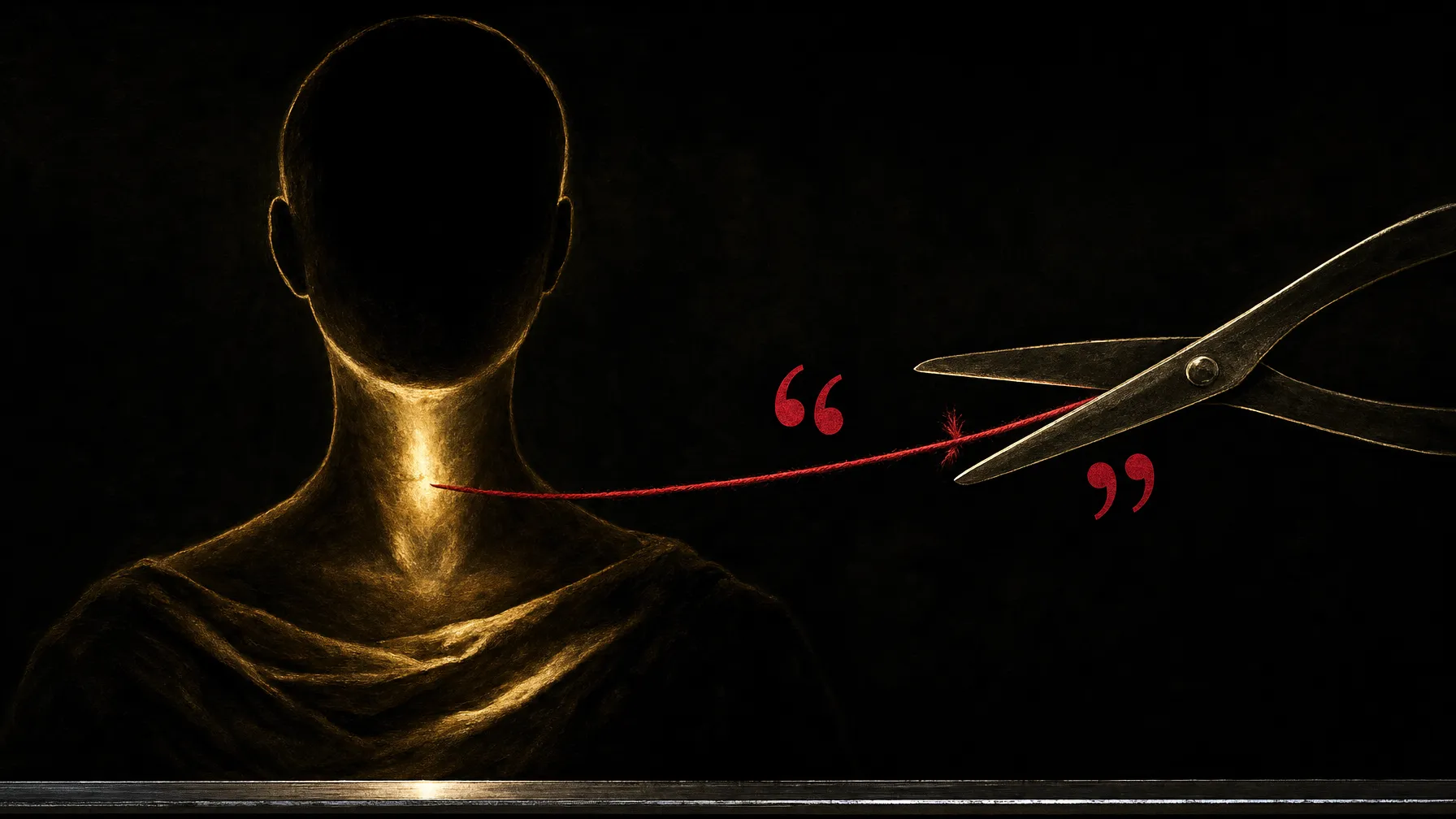


The Pattern
The Gateway Pundit report is built around a painful fact: Jim Ogonowski lost his brother, Captain John Ogonowski, when American Airlines Flight 11 was hijacked on September 11, 2001. In a campaign ad, Jim asks Michigan voters to reject Democratic Senate candidate Abdul El-Sayed because El-Sayed campaigned with Hasan Piker, the streamer who said in 2019 that “America deserved 9/11.”
The grief is real. The ad’s conclusion is a separate claim. The article slides between them so quickly that examining the slide can feel like disrespecting the family. It is not. It is how the message works.
Start with who said what
The sentence came from Piker, not El-Sayed. The Associated Press reports that Piker made the remark during a 2019 livestream while discussing U.S. foreign policy. AP also reports that Piker later called it poorly worded and said he did not mean that Americans deserved to die.
El-Sayed has said he does not think the attacks were justified. CBS News quoted his campaign saying he has unequivocally condemned terrorism and the September 11 attacks. The Gateway Pundit’s report says El-Sayed called Piker’s statement dumb and said America did not deserve 9/11. Those statements are reported positions, not proof that he handled the relationship well.
That establishes a narrower, less satisfying fact than the ad wants. El-Sayed chose to campaign with a person who made a morally repellent statement and has continued to defend the possibility of working with him. It does not establish that El-Sayed holds the statement himself.
Those are different propositions. The ad needs the second one to be felt, even though the available evidence supports the first one.
Three ads, one compressed message
The source trail needs one correction before the rhetoric can be analyzed cleanly. The Jim Ogonowski spot described by The Gateway Pundit and WorldNetDaily is not the same ad as every other 9/11 spot in this race.
The Ogonowski ad uses a family member’s testimony, crash imagery, Piker’s statement, and a direct instruction to reject El-Sayed. The official Mike Rogers campaign and the National Republican Senatorial Committee released a separate 30-second ad. Its transcript has Rogers invoke his work pursuing Osama bin Laden, call Piker a “terrorist sympathizer,” and quote El-Sayed saying he was “not here to disavow people’s views.” A third, one-minute ad from the pro-Rogers Great Lakes Conservative Fund uses 9/11 footage and goes further, saying El-Sayed “gives comfort to that hatred,” “accepts money from it,” and “justifies it.”
The length, wording, and evidentiary claims are different, and neither The Gateway Pundit nor WorldNetDaily says who sponsored the Ogonowski spot. The rhetorical bridge is similar: a statement by Piker is transferred through proximity to El-Sayed, then fused with the emotional authority of 9/11. Keeping the ads separate matters because a claim made by a super PAC is not automatically a claim made by the candidate, and a detail reported about one spot should not be attributed to another.
The record has boundaries
The documented record is relatively clear. Piker said the phrase. El-Sayed appeared with him. El-Sayed has said the attacks were not justified and has called the statement dumb. He has also defended reaching Piker’s audience and resisted demands that he cut ties with him. The ads use those facts to argue about his judgment.
The record does not establish that El-Sayed believes America deserved 9/11. It also does not establish, merely from an appearance or a disputed campaign-finance claim, that he “accepts” or “justifies” hatred. Those are inferences or accusations that need to remain labeled as such. The fairer criticism is that El-Sayed chose an association that gives opponents a credible question about judgment, while his answer is that coalition-building does not equal ideological adoption.
The family member changes the question
Jim’s presence supplies testimony no campaign spokesperson can imitate. He is not introduced as a partisan commentator making a routine attack. He is a brother remembering a brother and speaking about three children who lost their father. That makes the viewer receive the allegation first as an injury, then as a political claim.
The emotional sequence matters. Once Piker’s sentence is placed beside John Ogonowski’s death, asking whether El-Sayed personally endorses the sentence can sound like a procedural dodge. The audience is pushed toward a different test: if he were decent, would he appear beside this person at all?
That may be a legitimate question for a voter. It is not the same as proving the candidate believes what his associate said.
The identity cue is doing work
There is another layer the report leaves mostly unnamed. In the WND account of the Ogonowski spot, the attackers are described as “Islamic terrorists,” the 9/11 association is repeated, and that history is placed beside a candidate whose Muslim identity is part of the public context. The text never has to say that El-Sayed is responsible for Piker’s words. It can let the association carry a familiar suspicion instead.
That is one way racialization can work in political messaging. A specific speaker and a specific remark become a wider category. The category then supplies emotional meaning that the evidence does not establish. The reader is invited to move from “this person made a statement” to “people like this candidate are closer to the statement than they admit.” This describes the frame’s possible effect. It does not establish what the reporter or ad-makers privately intended.
The arrangement is still visible: Muslim identity, terrorism, 9/11 grief, and a demand to reject the candidate are placed in one continuous frame. The ad’s message can be anti-Piker and anti-El-Sayed at once, while also making Muslim identity feel like part of the evidence, whether or not that was the makers’ conscious intention. Axios reports that El-Sayed accused Republicans of Islamophobia, while Republican strategist Matt Schlapp warned that the tactic needed care because the party was also courting Arab voters. That context does not settle the dispute, but it shows why the identity cue is politically consequential rather than incidental.
The distinction matters because criticism of a candidate’s choices is legitimate. Criticism that treats a Muslim candidate’s proximity to a controversial public figure as uniquely revealing needs a higher evidentiary standard, not a lower one. Otherwise the identity cue becomes a shortcut around the question the ad cannot prove.
The real message is about permission
The literal message is “reject Abdul El-Sayed.” The operational message is more precise: do not grant him the benefit of separating his own words from the words of people he includes in his coalition.
That is a powerful campaign rule because it makes association do the work of evidence. Piker’s words are the evidence for the emotional charge. El-Sayed’s appearances are the bridge. The candidate’s own denial is recoded as prevarication, not treated as evidence about his position.
The article repeats that frame. It calls El-Sayed “radical,” says he “prevaricated,” and describes one of his explanations as “laughably” defensive. Those are not findings established by a document. They are instructions about how to interpret his response. The report is news-shaped, but its center is persuasion.
What the ad leaves out
The ad does not have to answer whether a candidate can work with someone whose views he rejects. That is a hard political judgment, and reasonable voters can disagree. It does have to make the candidate’s relationship look like a confession without showing a confession.
It also leaves out the costs of applying the rule consistently. Candidates campaign with large coalitions. They appear with donors, activists, celebrities, organizers, and online personalities whose histories they cannot control. If every appearance becomes adoption, the standard becomes a tool for selective prosecution. The side with the more aggressive archive of an opponent’s associates gets to manufacture the most incriminating version of that opponent.
The answer is not to ignore association. Association can reveal judgment, priorities, and willingness to accept a person’s reach. The answer is to name the exact inference being made: “El-Sayed appeared with Piker despite Piker’s record, and that choice should affect your view of his judgment.” That is a defensible argument. “El-Sayed therefore believes America deserved 9/11” is a different claim, and the cited record does not support it.
A clean way to watch the ad
Remove the family testimony for a moment, not because it is irrelevant, but because it is doing a second job. Then separate the chain:
Piker said the sentence. El-Sayed campaigned with Piker. El-Sayed has rejected the sentence while defending the relationship. The ad asks the viewer to turn the relationship into proof of shared belief.
The first three statements can coexist. The fourth is the argument layered on top of them.
The distinction is especially important around mass death. The memory of 9/11 should not become a transferable substance that sticks to whoever appears in the same photograph as the wrong person. Once that happens, grief has been converted into a political solvent. It dissolves the boundary between a person’s conduct and another person’s words.
The public record contains more than one 9/11 ad in this race, and separating them is part of the audit. The Ogonowski spot described by WorldNetDaily is distinct from the 30-second Rogers and NRSC spot published on the Rogers campaign site and the one-minute Great Lakes Conservative Fund super-PAC ad described by Axios and Mediaite. The Ogonowski spot’s wording and visuals are therefore attributed to The Gateway Pundit and WorldNetDaily’s reports. The broader pattern is documented directly in the Rogers campaign transcript and independent coverage. The underlying political question remains available for inspection: what did El-Sayed say, what did Piker say, and what is each ad asking proximity to prove?
The ad wants the viewer to stop at the image of the wound. Keep looking at the join between the wound and the vote.