The Pattern
This is an interruption. The evidence and resources are real. The person reading this is not a diagnosis, a headline, or a role assigned by a channel. If you may hurt yourself or someone else soon, stop reading and call emergency services, go to the nearest emergency department, or contact a crisis service now.
You did not arrive here all at once.
The first thing may have been a search after humiliation, exclusion, a violent home, or the feeling that nobody noticed. The anger may be real. The explanation that arrived afterward may still have been built for you by people and systems that benefit from keeping you angry.
One clip becomes another. One post supplies the next post. A private wound becomes a public grievance, then a group identity, then a test of loyalty. The movement feels like discovery because every step is presented as a reasonable answer to the last one.
That is the pattern. It is not proof that you are destined for violence. It is evidence that your attention and isolation are being used.
Choose the route that fits
If you may hurt someone soon
Stop reading and get another person into the room. Move away from anything that could make immediate harm possible. Leave the channel or group where the escalation is happening. Call emergency services now, or call or text 988 in the United States or 9-8-8 in Canada. If you are elsewhere, use your local emergency number or find a crisis centre.
You do not need a perfect explanation. “I am afraid I may hurt someone” is enough to begin.
If you are worried about someone else
Take specific threats, named targets, timing, farewell messages, or attempts to obtain dangerous materials seriously. Do not investigate, confront, or forward the material for attention. Save only what a professional needs, tell a trusted adult, school official, mental-health professional, or law-enforcement agency, and call emergency services if someone may be hurt soon. You can also call or text 988 in the United States or 9-8-8 in Canada for guidance about someone else.
If none of that is happening now, continue. This next section explains the pattern, not a person’s destiny.

How the narrowing happens
Recommendation systems learn what holds attention. Material built around anger, humiliation, fear, and certainty can perform well because it keeps people watching and returning. The next clip is only a little harsher. The next post is only a little more certain. Each step feels like the next reasonable thing.
Over time, repetition can narrow what a person sees and make a grievance feel like a complete explanation. The person still has agency. The system makes that agency harder to notice by making the next step easy and the wider world harder to see.
This is feedback loop radicalization. No recruiter is required. Repetition can do the work.
The people in the channels may call one another brothers. Some are hurt and looking for a frame. Others have learned that telling angry young men what they want to hear is an efficient way to build an audience. They give private pain a public enemy. They turn uncertainty into doctrine. They make belonging conditional on escalation.
What the system is using
The system is not a community in the human sense. It is a set of incentives that converts attention into status, revenue, influence, or reach. A person can become content. A wound can become a metric. A metric can become someone else’s power.
This does not mean every online community is dangerous, or that every strong opinion is radicalization. The warning signs are cumulative: isolation from people outside the channel, escalating language, praise for cruelty, pressure to prove loyalty, and a growing belief that harm will finally make other people understand.
This is belonging weaponization. The need to be seen is the hook. Escalation is rewarded with attention. De-escalation is treated as betrayal. The test of belonging is whether someone is moving toward the thing or away from it. The people who profit are not always the people running the channel. Sometimes they are the people who learn to turn attention into status.
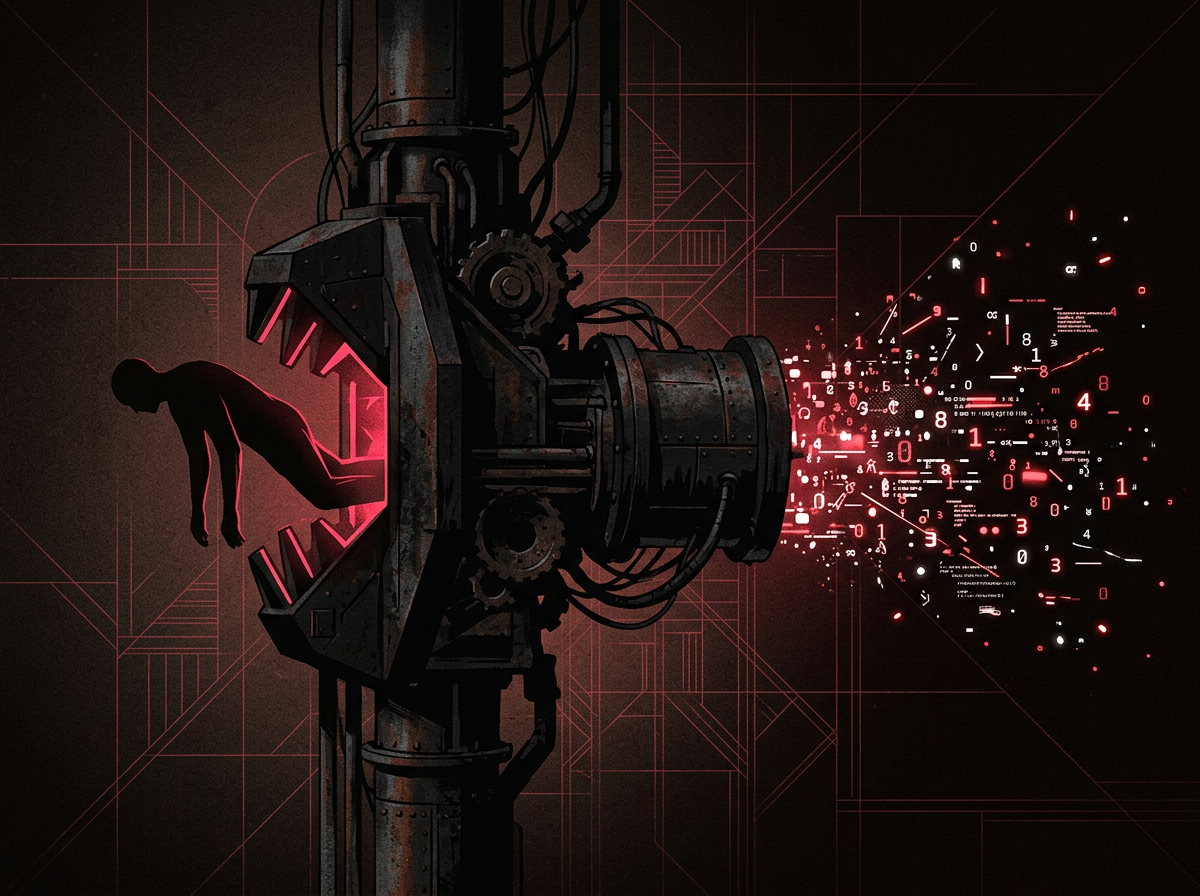
The machine is older than the screen
You should know this, because it changes what you are dealing with.
The delivery system is new. The pattern is not.
It was the pamphlet slipped under the door. It was the newspaper that ran the lie above the fold and the correction no one ever saw. It was the radio voice telling a nation who to fear. It was the magazine. It was the television, playing the same dread on every channel until it felt like weather.
The old versions broadcast to everyone and hoped something landed. The newer version follows a person into the private hours, learns which hurt to press, and offers the next piece before the person has had time to decide what they believe.
The feed can feel personal without knowing you. Personalization is not care. A recommendation is not recognition. Being repeatedly shown the same explanation does not make it true.
The story has more than one ending
The wound does not only lead toward the story the channel is selling. It has exits. Some are difficult. Some are imperfect. They are still real.
Violence is not a form of recognition. Research from the Secret Service and The Violence Project finds crisis, grievance, leakage, and suicidal thinking among many people who carried out attacks. Those findings describe patterns in studied cases. They do not predict what any individual will do, and they do not make violence inevitable. They do make one thing clear: an immediate threat needs human intervention, not more time inside an escalating channel.
Belonging can be rebuilt. A real congregation, team, classroom, family, or peer group can help when it allows questions and does not demand obedience. Belonging that requires cruelty is not safety. Belonging that survives your doubt is different.
Some groups use care as a route to control. This is care capture: the warmth is real enough to create trust, but the trust is used to shrink your choices. A healthy group does not punish you for leaving, questioning, or maintaining relationships outside it.
Passing the pain on is not healing. Making someone else smaller can create a moment of power, but it does not repair the original wound. It gives the pain a new address.
Some exits only relocate the pain. Substance use, compulsive withdrawal, abusive relationships, and other forms of escape can postpone the moment without changing the structure. Support makes it possible to face what happened without facing it alone.
The useful question is not “What role has this channel given me?” It is “What would help me become less alone and less activated today?”

Do not let a category erase a person
Violent channels often replace people with categories. The label makes harm feel abstract and makes the speaker feel morally clean. This is harm sanitization: the word is cleaner than the thing it describes, and the cleanness is the point.
The people behind those categories are a fourteen-year-old worried about a test, a teacher who stayed late to help a struggling student, a custodian counting the days to retirement, a child carrying a drawing through the morning corridor. They are people having ordinary days until the ordinary day stops.
Every one of them is a complete person with a life that a channel will never show you. That is how abstraction works. It builds a wall of words between you and what you already know.

The voice outside the channel
The channel can describe your grievance. It cannot know your whole life. It cannot tell you what you will value six months from now. It cannot be the person who sits beside you, takes the phone, calls for help, or stays through the night.
That is where the interruption begins. A real person enters the room. The pattern becomes visible. The next recommendation does not arrive.
How to interrupt the pattern
If there is no immediate danger, start with one small interruption:
Stop the input. Leave the channels, mute the accounts, and put the phone somewhere outside reach for ten minutes. You do not need to solve your life before you create distance from the material intensifying the crisis.
Change the room. Go where another safe person is present. Drink water. Step outside if you can. These are not cures. They are ways to create time between an impulse and an irreversible act.
Create distance from anything that could make immediate harm possible. Ask someone else to secure it. Do not handle a dangerous situation alone.
Tell one real person. You can say, “I am not safe to be alone right now.” You can say, “I am thinking about hurting someone.” You do not need to defend the feeling before you ask for help.
The important distinction
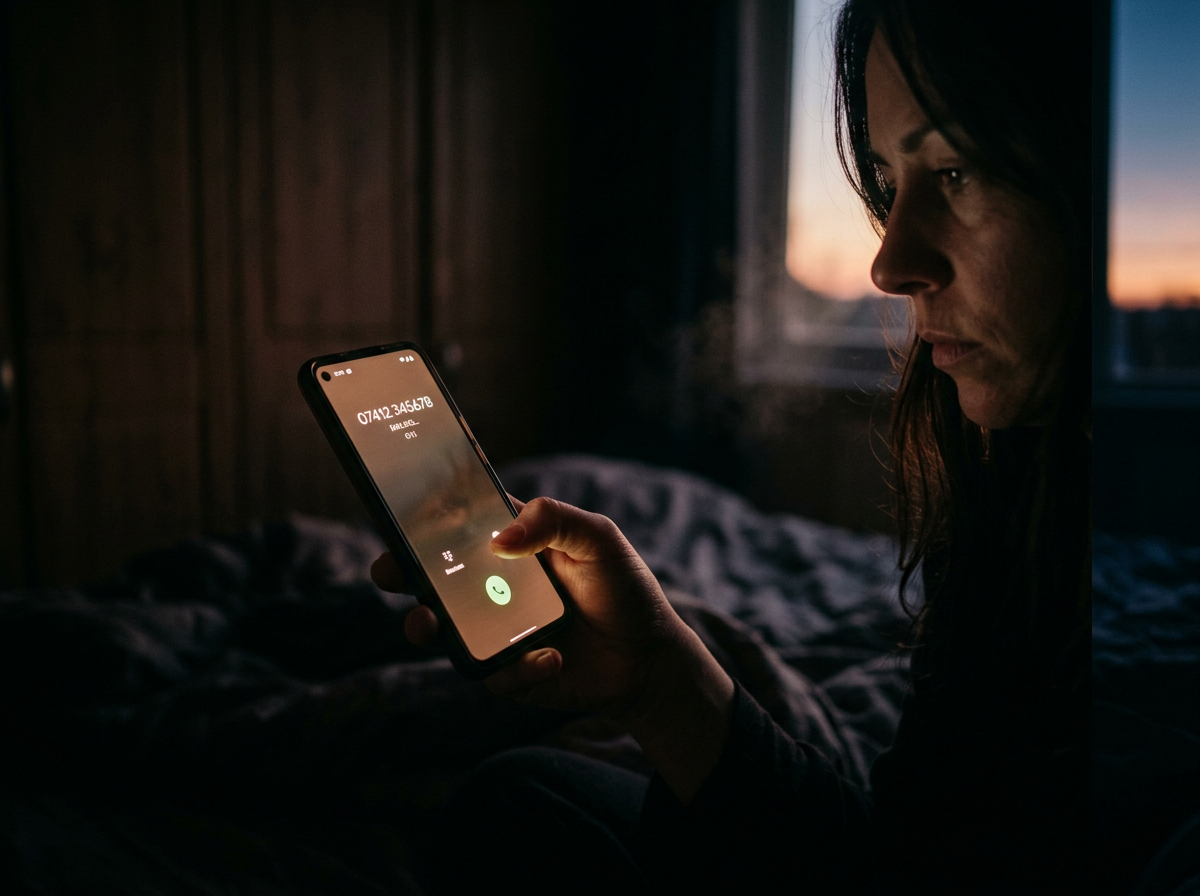
The anger may be real. The direction may have been supplied.
Those are not the same thing.
You are not the category, the grievance, the channel, or the headline waiting to happen. You are a person whose next decision still matters. Put the phone down. Change the room. Tell someone. Stay long enough for another version of the day to become possible.
Right now
This is not a test of character. It is a safety problem.
If you are thinking about hurting yourself or someone else, do not stay alone with the decision. Contact a crisis service or emergency services, tell a trusted adult, or go to the nearest emergency department. If you are worried about someone else, take specific threats, plans, or attempts to obtain dangerous materials seriously. Do not investigate them yourself. Tell a trusted adult, school official, mental-health professional, or law-enforcement agency.
You do not have to prove that the danger is real before asking for help. You only have to say what you are afraid might happen.
Resources
These services are real. Availability and emergency-response policies vary by service and location. If someone may be hurt soon, call emergency services or go to the nearest emergency department. If speaking is unsafe, use a text or chat option where available.
- 988 Suicide and Crisis Lifeline: Call or text 988 in the United States, 24/7. You do not have to be suicidal. You can call because you are angry and scared and do not know what you might do.
- Canada 9-8-8 Suicide Crisis Helpline: Call or text 9-8-8 in Canada, 24/7. You can contact it for yourself or because you are worried about someone else.
- Crisis Text Line: Text HOME to 741741 in the United States. In the UK, text SHOUT to 85258. Regional details are listed by Crisis Text Line.
- The Trevor Project (LGBTQ+ youth): 1-866-488-7386 or text START to 678-678
- Boys Town National Hotline: 1-800-448-3000. For kids and teens, 24/7.
- Samaritans (UK): Call 116 123, free, 24/7
- Kids Help Phone (Canada): 1-800-668-6868 or text CONNECT to 686868
- International Association for Suicide Prevention: iasp.info/resources/Crisis_Centres
If you are in the United States and worried about what you might do, contact 988 or emergency services now. If you are worried about someone else, tell a trusted adult, school official, mental-health professional, or law-enforcement agency. The Secret Service research describes prevention through reporting and threat assessment. It does not establish a universal public hotline for people to report themselves.
If you know someone on this path, take specific warning signs seriously. In the Secret Service study of targeted school violence, other people knew about the attacker’s idea or plan in 81 percent of cases. That finding describes the cases studied. It does not mean every angry post predicts violence. It means silence is not a safety plan. Tell a trusted adult, school official, mental-health professional, or law-enforcement agency. If there is an immediate threat, call emergency services. Do not investigate the person yourself. Do not forward violent material for attention.