

The Pattern
The story about Zohran Mamdani is not that every criticism of him is false. It is that a real record has been padded with fabricated claims, anonymous associations, and synthetic media until “Muslim,” “pro-Palestinian,” “socialist,” and “terrorist” are made to look like interchangeable words.
That is not accountability. It is association laundering.
What the record supports about Mamdani
Mamdani is a democratic socialist, a critic of the Israeli government, and a supporter of Palestinian rights. Those positions are public and controversial. They are not hidden extremist beliefs.
He has condemned the October 7 attacks, said Israel has a right to exist with equal rights for all, and said his administration is committed to the safety of Jewish New Yorkers. His administration has also documented a housing agenda built around tenant protection, faster housing construction, and enforcement against negligent landlords.
Readers can reject his ideology, rhetoric, or policy choices. But those disagreements should be argued from the record. Calling a Muslim mayor-elect an Islamist, terrorist sympathizer, or Sharia advocate without evidence is not criticism. It is a smear.
The claims that fail
“Mamdani wants Sharia law.”
There is no evidence that Mamdani has proposed replacing New York law with religious law. PolitiFact rated the claim Pants on Fire, and Deutsche Welle likewise found no evidence for it. The claim converts a candidate’s Muslim identity into an allegation of theocracy. That is not a policy description.
“ISIS endorsed Mamdani.”
AFP traced the circulating “ISIS statement” to a fabrication. Experts told AFP that ISIS does not endorse democratic candidates and would reject Mamdani’s Shia Muslim identity and electoral politics. The claim is not merely exaggerated. The supposed endorsement was fake.
“Mamdani won because New York was taken over by Islamists.”
This is a political narrative, not a demonstrated fact. It replaces an election result, a coalition of voters, and a housing platform with a religious conspiracy. No evidence establishes that New York’s election was controlled by an Islamist organization.
The fake Musk video and fake Jets image
DW documented an AI-generated video falsely presented as Elon Musk discussing Mamdani, a fabricated image portraying Jets cheerleaders in niqabs, and a fake article attributed to Alan Dershowitz. These items were designed to make a political fear feel witnessed. They were not evidence of Mamdani’s policies or conduct.
What the attacks reveal
The recurring tactic is specific: take a real fact, add a fabricated association, then circulate the result as proof of hidden intent. A real Muslim identity becomes “Sharia.” A real lyric becomes “terrorism support.” A real criticism of Israel becomes “hatred of Jews.” An AI image becomes a prediction of what New York will become.
That pattern deserves a clear verdict: false when the evidence is fabricated, misleading when the evidence is real but the conclusion is unsupported, and legitimate when the criticism survives direct checking.
What ties can actually be documented
Four different kinds of connection appear in the public record, and they should not be collapsed into one.
- Israeli government interest: Israel’s Ministry for Diaspora Affairs and Combating Antisemitism included Mamdani and U.S. Jewish-community reactions in a public diaspora report. That documents monitoring and political interest. It does not document funding or operational control of online claims.
- U.S. advocacy: The Anti-Defamation League, a U.S.-based organization, launched a Mamdani Monitor to track his administration, policies, and appointments. Its position is openly critical. That is an identifiable advocacy relationship, not evidence that Israel directed the project.
- Israel-focused publishing: An Israel-focused site published severe claims about Mamdani, including the claim that a lyric referencing the Holy Land Five proved he endorsed terrorism financing. The site’s public article does not establish Israeli government funding or direction.
- Campaign money: New York’s Campaign Finance Board records outside spending in the mayoral race. Political donors and committees may have supported candidates who opposed Mamdani, but a donor’s pro-Israel position is not the same as Israeli state funding. The records must be traced by committee and donor before anyone can make a foreign-funding claim.
Some Israel-focused and pro-Israel advocacy outlets have published severe claims about Mamdani. One Israel-focused site, for example, treats a lyric referencing the Holy Land Five as proof that Mamdani endorsed terrorism financing. The lyric is real. The leap from a lyric to a complete political endorsement is an interpretation, not an established fact.
That distinction matters. We found evidence that Israel’s government and Israel-focused organizations criticized Mamdani’s positions on Israel, Gaza, and antisemitism. We did not find evidence that Israel funded, directed, coordinated, or originated the fake ISIS statement, the fake Musk video, or the fake Jets image. Those claims should not be assigned to Israel without evidence of authorship, money, or coordination.
What remains fair to criticize
Mamdani’s record is not beyond criticism. He has used rhetoric about Israel that many Jewish New Yorkers find hostile. He initially declined to condemn the phrase “globalize the intifada” before later saying he would discourage its use, a slogan whose meaning is contested but whose use frightens many people because of the history of attacks associated with the intifadas. He has also changed or softened some earlier positions, including his 2020 calls to defund the NYPD.
Those are legitimate subjects for debate. They are not proof that he wants Sharia law, supports ISIS, or endorses terrorism. A fair review must not launder real disagreements into fictional evidence, and it must not launder genuine concerns into claims that cannot survive source-checking.
The Mamdani test
For every allegation, ask four questions:
- What exactly was said or done?
- Who is the original source?
- Is the claim literal, edited, inferred, or fabricated?
- Does the evidence show Mamdani’s own position, or merely place him near someone else’s words?
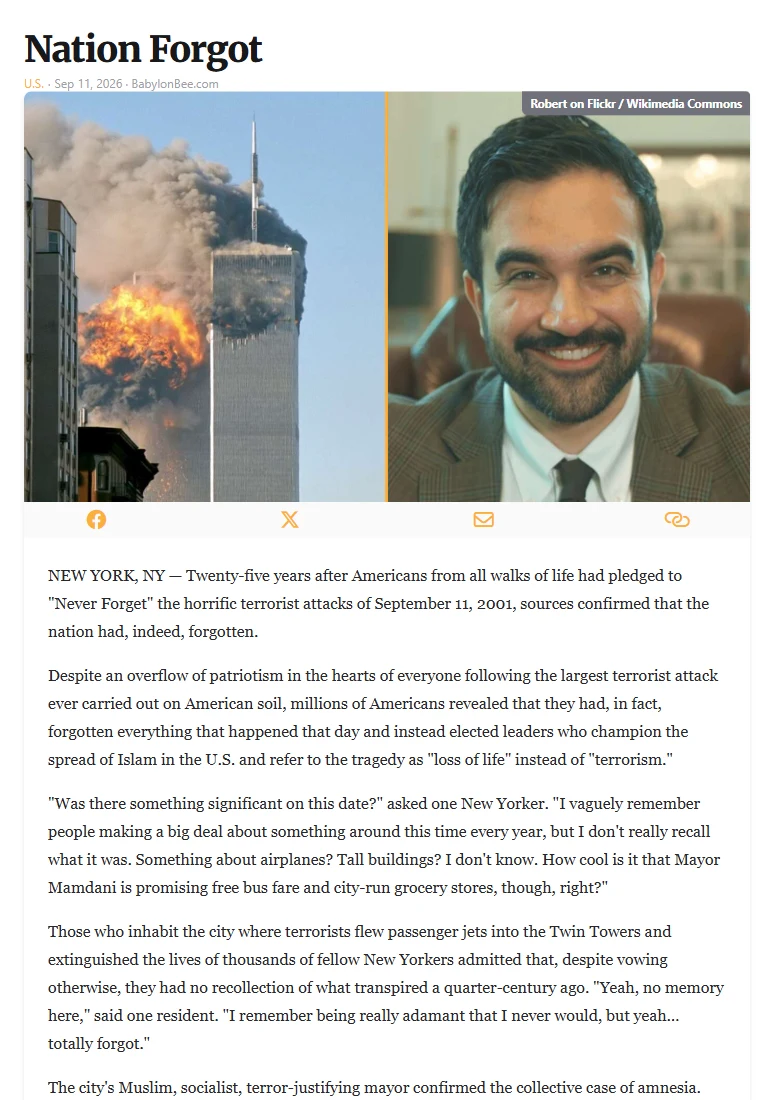
The MSN headline that prompted this review fails the fourth test. It makes Hasan Piker’s alleged reaction do work that the evidence does not yet support, then uses Weaver’s old remarks to intensify the association with Mamdani.
Verdict: Several viral claims about Mamdani are demonstrably false, including the Sharia allegation, the supposed ISIS endorsement, and multiple pieces of synthetic media. Criticism of his Israel policy and rhetoric can be argued on the record. The evidence reviewed here does not establish Israeli funding, direction, coordination, or authorship of those false claims. Attribution must be proven claim by claim.