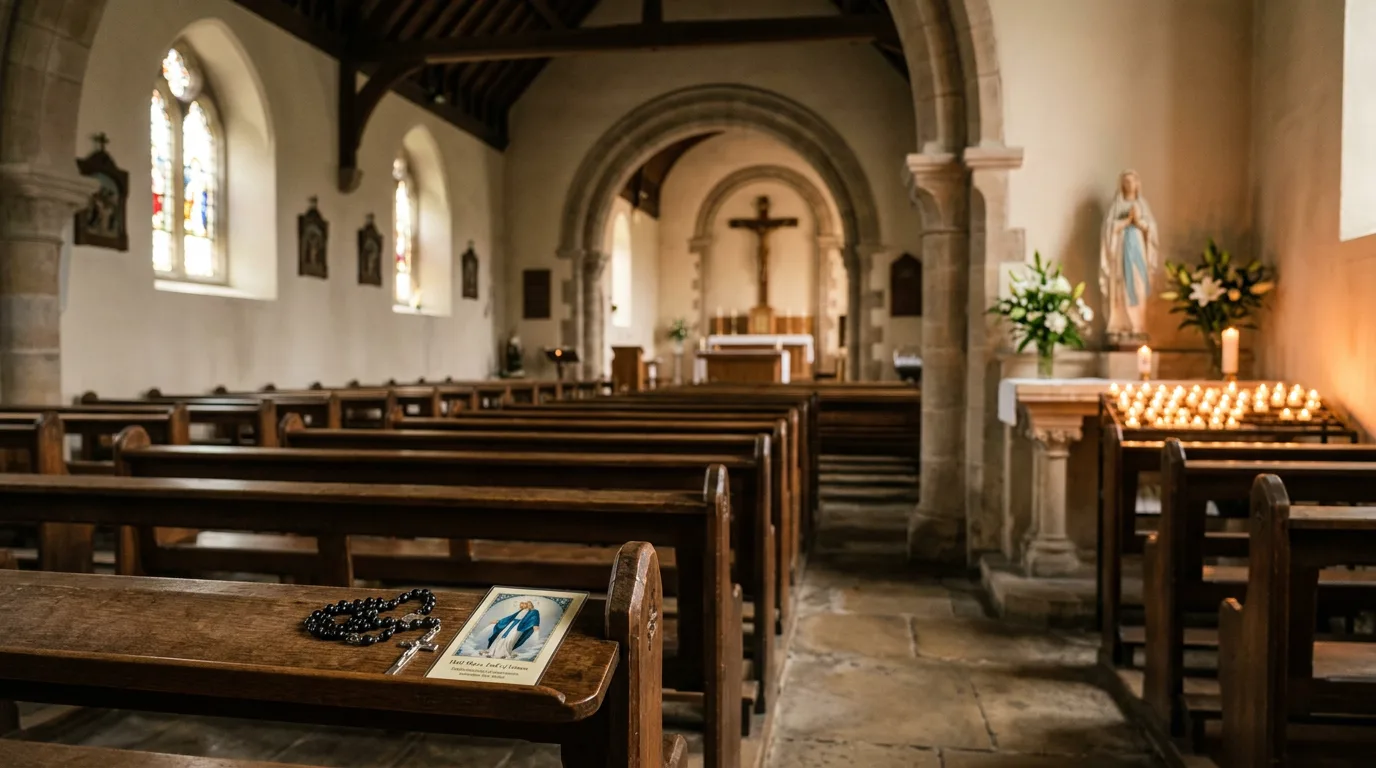

Texas did not pass a law requiring every public-school student to read the Bible. It passed something more legally complicated.
Senate Bill 11, effective September 1, 2025, lets a school district or qualifying charter school adopt a policy creating a daily period for prayer and reading the Bible or another religious text. The school board must vote on that policy. The state did not make the period automatic in every district, and a student cannot be required to participate under the law’s consent rules.
That distinction matters. So does the part that is easy to miss: the government has still created the period, placed it inside the school schedule, and written the conditions under which families may enter it.
Two bills, two different claims
The Texas Legislature passed two religion-in-school measures in the same session. They are often collapsed into one story.
| Law | What it does | Is participation optional? |
|---|---|---|
| SB 11 | Allows a district to adopt a daily period for prayer and reading the Bible or another religious text | The law requires signed consent for participation |
| SB 10 | Requires a Ten Commandments poster or framed copy in each public-school classroom, subject to court orders | It is a display requirement, not a student exercise |
SB 11 does not tell every Texas school to begin the day with Bible reading. It tells every district board to decide whether to adopt the policy. If a district adopts it, the policy must apply across its campuses and provide an opportunity for students and employees to participate each school day.
The policy also cannot use the public-address system for prayer or religious reading, and it cannot substitute for instructional time. A parent or employee may revoke consent. The law says the period may be held before normal school hours or in a room where consent has been obtained from everyone present.
Those safeguards are the state’s answer to the obvious constitutional objection. They do not settle the objection.
The consent form does more than ask permission
SB 11’s consent form must acknowledge that participation is a choice. It must say that the signer has no objection to hearing the prayers or readings offered during the period. It must also include an express waiver of the signer’s right to bring certain state or federal claims arising from the adoption of the policy, including an Establishment Clause claim.
That is unusual enough to read in the statute itself. The state is not merely saying, “You may participate if you wish.” It is asking families to consent to the religious exercise and release the district and its employees from liability for specified claims.
The waiver does not make the law constitutional. It may become part of the litigation if a district adopts a policy and a family challenges how that policy operates. A parent’s signature also cannot automatically erase a child’s independent constitutional interests. Whether the waiver is enforceable would depend on the facts and the court reviewing it.
What the Supreme Court has already said
The constitutional baseline is not that religion disappears from school. Students may pray privately. Religious clubs may meet under applicable equal-access rules. Schools may teach about religion as part of a secular academic program.
The harder line concerns school-sponsored religious exercises.
In School District of Abington Township v. Schempp, the Supreme Court struck down state laws requiring Bible readings in public schools, even though Pennsylvania allowed parents to excuse their children. The Court treated the exercises as religious activity embedded in the public-school day, not as private student expression.
In Kennedy v. Bremerton School District, the Court emphasized that public schools cannot place students in the position of choosing between participating in a school religious exercise and publicly rejecting it. The case also protected a public employee’s private prayer, which is different from a school creating and administering a religious period for students.
SB 11 is not identical to the laws invalidated in Schempp. It uses opt-in consent rather than compulsory attendance, permits religious texts other than the Bible, and directs districts to keep nonparticipants from being exposed to the exercise. Those differences give Texas a constitutional defense.
The challenge is that SB 11 still turns a public school into the organizer of the period. A court would likely have to examine the actual policy, the setting, the consent process, the treatment of students who do not participate, and the pressure created by making the exercise an official school activity.
Voluntary can still carry a cost
Legal consent and social pressure are not the same thing.
A student may technically be free to decline and still understand that declining marks them as different. A parent may sign because the alternative is having a child sit alone, miss a social group, or explain a religious refusal to a teacher. A teacher may participate because the district has placed the exercise inside the workday and made nonparticipation visible.
Those facts would matter. The Supreme Court’s school-prayer cases have repeatedly treated the public-school setting as distinct because attendance is compulsory, children are young, and the school carries authority that a private group does not.
That is why the constitutional question cannot be answered by the word “voluntary” alone. The question is voluntary under what conditions, administered by whom, and with what consequences for the person who says no?
The question Texas has put on the calendar
The state has made a policy choice and called the choice religious freedom. Supporters can point to private participation, parental consent, equal access for other religious texts, and the Supreme Court’s recent protection of religious expression by public employees.
Opponents can point to the public-school schedule, the official policy, the religious exercise created by the government, the consent waiver, and the Supreme Court’s rejection of opt-out Bible reading in Schempp.
The honest legal description is narrower than either slogan: SB 11 is not a statewide Bible-reading mandate, and it has not been finally declared constitutional or unconstitutional. It creates a policy that may be challenged when a district puts it into practice.
That is where the useful reporting begins. Find the board vote. Read the local policy. Ask where nonparticipants go, who supervises the period, what the consent form says, and whether students can decline without being singled out. The word “voluntary” is printed at the top. The experience will be in the room.