A sitting president stood in the Oval Office on August 10, 2026, and told reporters: “We have jihadists being elected all over the place, whether it’s communism [or] jihadism.” He added that “people don’t want to have radical lunatics involved in running our country.” In the same remarks he said Somali Americans are “not smart,” have “no aptitude,” and have “nothing going” for them to be advising the nation on how to run it. He did not name Abdul El-Sayed, the Egyptian American doctor who had won Michigan’s Democratic Senate primary five days earlier. He didn’t need to. Hours later, he named him anyway, sharing a social media post of El-Sayed’s face captioned “They are coming for your home and your belongings.”
Three days before that, a member of Congress had posted that “every single Muslim holding public office in America is a trojan horse, and a threat to both national security and our republic.” This outlet documented that claim in full: who said it, why, and what the four actual Muslim members of Congress have spent a combined decades doing instead of infiltrating anything.
Al Jazeera separately mapped a 1,966-account network that spent 24 hours stripping the context from one word in El-Sayed’s own victory speech and recasting his election as a religious takeover.
A studio film opens next month in which a Delta Force veteran fights off “radical Islamic terrorists” who have seized an American college campus and imposed Sharia law. A federal report found Muslim nonprofits received under four cents of every safety-grant dollar meant to protect religious institutions from exactly this kind of rhetoric. And over 100 miles northwest of Manhattan, in a hamlet of about two hundred people, residents have spent years watching a bike gang ride past their homes to protest a terrorist training camp that the FBI has never found, because Islamberg, New York, does not have one.
None of these people know each other. None of these stories were coordinated. That’s the finding, not a caveat: the premise underneath all of them is now common enough that it doesn’t need coordinating anymore.
The premise
Every item above runs on the same substitution. Ordinarily, a security threat requires a specific person, a specific plan, and evidence. The threat premise skips straight to the conclusion: Muslim identity itself is the security-relevant fact. Not what a person has done. Not what a community has produced. What they are. Once identity does the work evidence is supposed to do, no amount of contrary evidence can ever fully clear it, because the claim was never really about conduct in the first place.
That’s not a new move. It has a nearly two-decade paper trail, a small number of named originators who built careers on it, and a body count.
Twenty years of searching for a camp that isn’t there
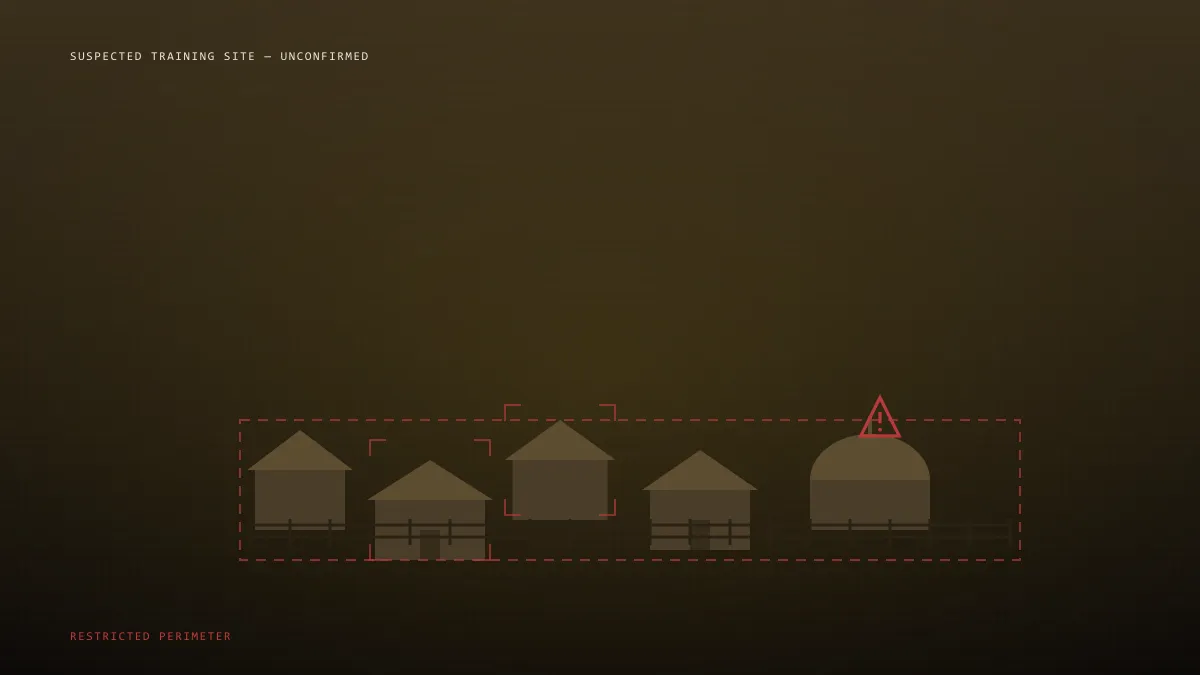
Islamberg is a small, mostly African American Muslim community founded in the Catskill Mountains in the 1980s, headquarters of a national umbrella group called The Muslims of America. Since at least 2007, a specific claim has circulated about it: that it is one of dozens of secret “terrorist training camps” operating inside the United States.
The claim has an identifiable point of origin. Martin Mawyer, founder of the Christian Action Network, produced a 2009 documentary called Homegrown Jihad: The Terrorist Camps Around the U.S. and co-authored a book, Twilight in America: The Untold Story of Islamic Terrorist Training Camps Inside America. Ryan Mauro built a parallel project called the Fuqra Files for the Clarion Project. The claim was built from the start so that an absence of evidence could never disprove it: a raid that finds nothing reads, in this genre, as proof the cover-up is working rather than proof there was nothing to find.
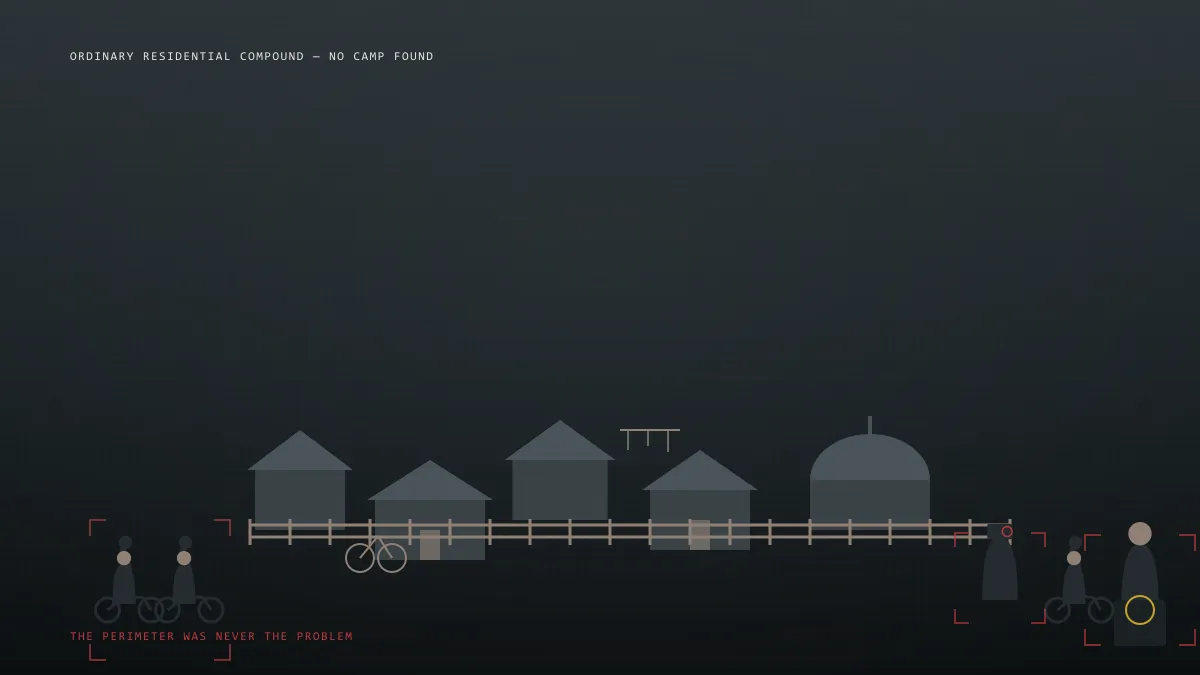
Investigations happened anyway. Local and state police, and federal agencies with far more reach than a documentary crew, have looked. The Anti-Defamation League’s Oren Segal put it plainly: “the predominant narrative of terrorist training camps is one that is, first of all, unproven.” No raid has produced a camp. No prosecution has produced a trained cell. Nearly two decades of a specific, checkable claim, and the claim has never once checked out.
What the search produced instead
What it produced instead were two armed plots to attack Islamberg’s actual residents, both mounted by people who believed the training-camp claim was true.
In 2015, Robert Doggart of Signal Mountain, Tennessee, spent three months planning an attack: burn the mosque, the school, the cafeteria. He recruited over Facebook, by phone, and in person, and showed an informant maps of the community along with a rundown of the guns and ammunition the attack would need. He was recorded discussing the risk of killing children in the process: “I don’t want to have to kill children, but there’s always collateral damage.” The Department of Justice convicted him on charges including solicitation to commit arson and civil-rights violations. He was sentenced to 235 months, just short of twenty years.
In January 2019, three men and a sixteen-year-old were arrested in Greece, New York, with 23 legal firearms and three homemade bombs built from Mason jars, black powder, BBs, and nails, planning a second attack on the same community. The plot surfaced only because a classmate of the minor reported what he’d said. All four were sentenced: two of the adults received four to twelve years, a third adult received seven, and the teenager, tried separately, also received seven. Islamberg’s residents had now survived two documented plots in four years, built on a claim about them that has never once been substantiated.
The myth’s other product is smaller but steadier: an annual motorcycle ride. A group calling itself American Bikers United Against Jihad has staged a “Ride for National Security” past Islamberg since at least 2016, pairing a prayer vigil with a pig roast and, in the organizers’ own event description one year, the line: “We aren’t going to let them turn this country into a SHITHOLE.” Turnout has often been outnumbered by the peace rallies held to meet it. The ride keeps happening regardless of turnout, because the ride was never really about turnout. It’s a yearly renewal of the claim, performed at the doorstep of the people it’s about.
Twenty years of investigation found zero camps. The same twenty years produced two bomb plots and a recurring parade, all built by people acting on a claim that investigation never supported. The gap between what was searched for and what was actually manufactured is the whole story, and it is not an Islamberg-specific story.
The politics catch up
For most of that history, the training-camp claim lived in documentaries, blogs, and biker-gang Facebook events, not in the Oval Office or a sitting member of Congress’s verified account. That changed this month.
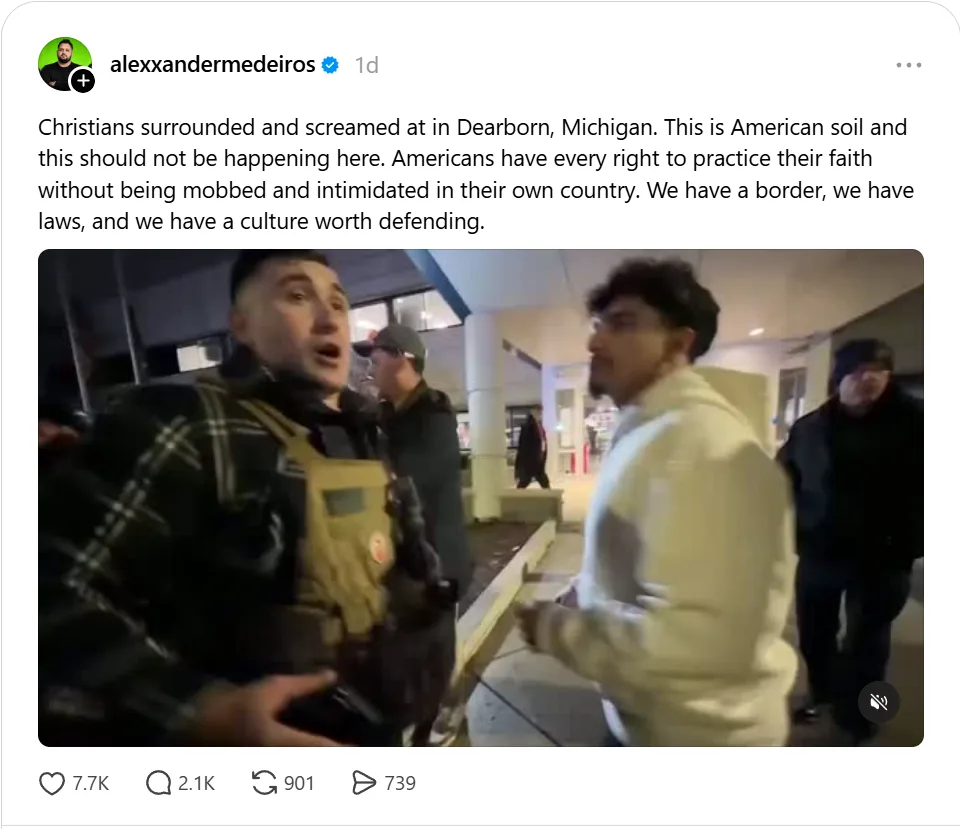
Nancy Mace’s “trojan horse” post and Trump’s “jihadists” remarks landed within 72 hours of each other, both triggered by the same event: Abdul El-Sayed defeating more than $60 million in opposition spending, most of it pro-Israel-funded, to win Michigan’s Democratic Senate primary by roughly a single point. Trump had not named El-Sayed directly in the Oval Office, but reporters covering the remarks connected them to his primary win five days earlier, and Trump did the connecting himself hours later with the “coming for your home and your belongings” post. Neither man offered a specific act, plan, or piece of conduct by El-Sayed, Mace’s four sitting colleagues, or anyone else. Both used the vocabulary Islamberg’s originators spent two decades normalizing: an unspecified, undocumented, and unfalsifiable danger, located in identity rather than behavior.
The infrastructure behind the amplification is no longer improvised, either. Al Jazeera’s mapping of the anti-El-Sayed pile-on found 1,966 accounts and more than 2,500 connections forming around a handful of accounts within 24 hours: a manufactured wave, not an organic one, that arrived with its talking points already matched to what a president and a congresswoman would say next.
Same premise, wider screen
The same premise is now a studio film. Run Hide Fight: Infidels, produced by the Daily Wire and starring Jonathan Majors, follows a Delta Force veteran defending a college campus after it’s seized by “radical Islamic terrorists” who impose Sharia law. Coverage of the June 2026 teaser, which spliced in real news footage of actual terrorism and extremism alongside footage of ordinary protests, described the film as conflating pro-Palestinian campus activism with ISIS-style violence and recycling post-9/11 anti-Muslim tropes. It releases September 16.
A biker ride past two hundred people’s homes is a fringe annual event. A studio release with a recognizable lead actor is distribution at scale. Same premise. Wider screen.
The ledger
None of this is free, and the costs land on the people the premise claims to be worried about, not on the people making the claim.
The Council on American-Islamic Relations logged 8,683 discrimination complaints in 2025, the highest single-year total since it started counting in 1996. Thirty-three separate incidents targeting mosques and Islamic institutions were logged in that same year, according to CAIR’s 2026 civil rights report.
The federal government’s own security-grant numbers show where protection money for religious institutions actually goes. Of $850 million distributed over nine years through the Department of Homeland Security’s Nonprofit Security Grant Program, Muslim nonprofits received 3.8 percent, against roughly 60 percent for Jewish institutions and just over 25 percent for Christian ones. MPAC’s Sameer Hossain pointed to a compounding factor: current federal grant conditions restrict DEI initiatives, aid to undocumented immigrants, and Israel-boycott activity, which makes the already “cumbersome and bureaucratic” application harder for exactly the community facing the rhetoric documented above. Dr. Sarah Mohamed’s read on the number: “it’s a really, really small amount going to a community that is under threat, and a growing threat.”
A federal training-camp claim that produced zero camps got two real bomb plots built on top of it. A federal safety-funding program meant to protect religious institutions from the fallout of that claim sends the community it’s most about under four cents on the dollar. Both numbers are public. Neither one moves the other.
The trap door
A claim structured so that a lack of proof still counts as proof isn’t a claim. It’s a trap door. The alibi was built into the theory before the theory needed one: a raid that finds nothing isn’t evidence against the camps, in that logic, it’s evidence of a cover-up too total to reach. No version of “we looked and found nothing” can close a case built that way.
It also isn’t free to keep open. A documentary, a book, a fundraising email, and a box-office release have all monetized the premise staying unresolved for going on two decades. “Jihadist,” “trojan horse,” and “invasion” moved from a biker gang’s own event description to a president and a sitting member of Congress inside a single news cycle, which is what happens to a claim once holding it stops costing the person holding it anything. The training-camp claim never produced a camp. It produced five people willing to act on it, five federal sentences, and a funding gap that still runs under four cents on the dollar.
Twenty years is long enough to find a training camp if one exists. It is also long enough to notice that the people insisting on its existence keep being the ones who show up armed.