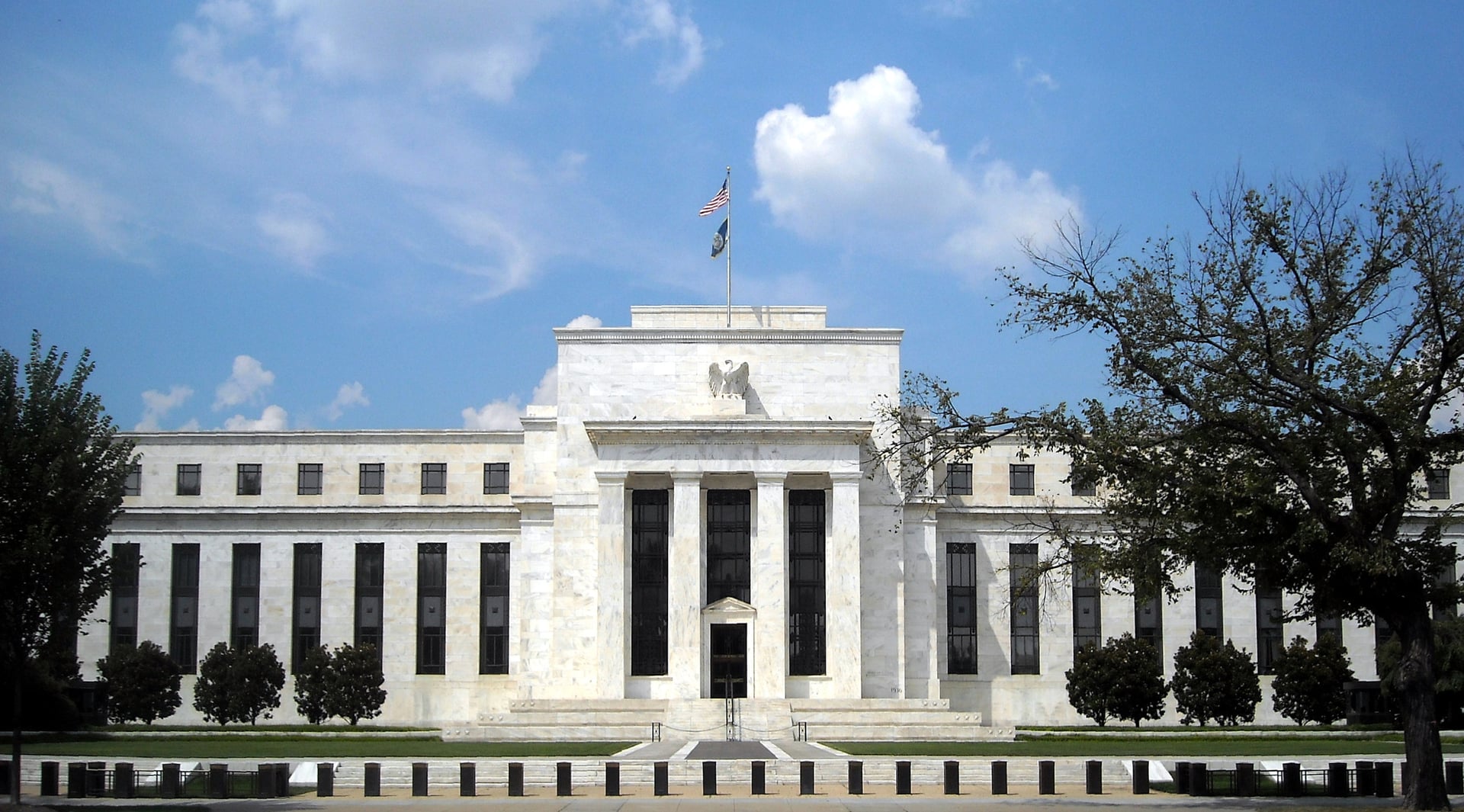
The top ten percent of American households own 87 percent of the stock held by anyone in the country. The bottom half own about one percent. That is not a soft estimate. It comes from the Federal Reserve’s own Distributional Financial Accounts, updated every quarter and public to anyone who wants to check it. Artificial intelligence did not create that gap. It is now the fastest-growing thing sitting on top of it.
Ask whether AI will make American life better, or whether the rich will use it to widen the divide, and the honest answer is not a hedge. It is yes, and yes. Both halves are already measurable, in the same year, from the same agencies and universities that would happily publish evidence pointing the other way if they had found it. Treating this as a two-sided debate, pick better or pick worse, is its own small deception. The useful question was never which side to choose. It is how both can be true at once, and what decides which one lands on you.
What is already real
Start with the part that is true and good, because it is true and good, not because it earns anything else in this piece the benefit of the doubt.
A Fortune 500 company gave 5,179 customer support agents access to a generative AI assistant. The researchers found that access raised the number of issues resolved per hour by 14 percent on average, and by 34 percent for the newest, least experienced agents, who gained the most. The tool worked by spreading what the best agents already knew. It compressed the gap between a novice and an expert instead of widening it. This is real, it is measured, and it is the strongest evidence available that AI can narrow inequality inside a workplace rather than widen it.
It happened because a company chose to deploy the tool that way. Nothing about the technology made that choice automatic. That qualifier is the rest of the article.
Who owns the machine
Break the Federal Reserve’s wealth data down further and the picture sharpens. Of all the corporate stock and mutual fund wealth held by American households, the top one percent alone hold 50.2 percent of it. The next nine percent hold another 37.2 percent. That is 87.4 percent of the stock market sitting with the wealthiest tenth of the country. The bottom half hold about one percent. Total household net worth is only slightly less concentrated: the top one percent hold 31.6 percent, the top ten percent hold 67.9 percent, and the bottom half hold 2.5 percent.
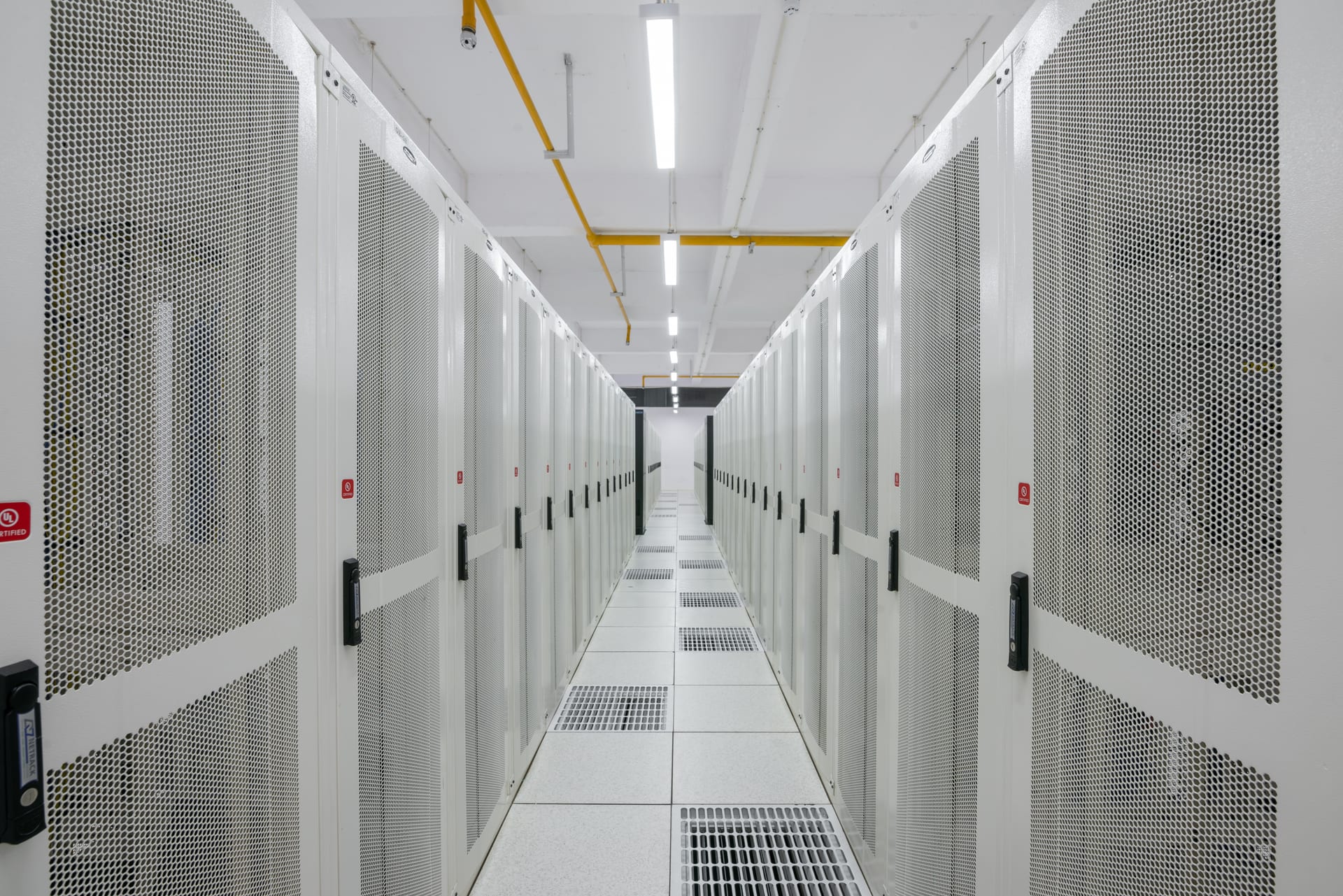
That is the ownership structure the AI boom is running through. By their own early-2026 guidance, Amazon, Alphabet, Microsoft, and Meta were on pace to spend nearly $700 billion combined this year building the data centers and chips that generative AI runs on. That spending is a bet, funded largely by public shareholders, that AI will raise these companies’ earnings enough to justify it. When the bet pays off in higher stock prices, the payout follows the ownership numbers above almost exactly. Gains do not spread themselves evenly by default. Somebody has to build the mechanism that spreads them, on purpose, or it will not happen on its own.
The same dynamic shows up worldwide. Oxfam’s Davos report found that billionaire wealth rose 16 percent in 2025 to $18.3 trillion, three times the pace of the prior five years, and named a specific driver: “the growth of AI-related stocks that have provided a boon to super-rich investors world-wide.” That is Oxfam’s phrase, describing a real trade that happened in public markets, open to anyone holding the stock. Almost nobody in the bottom half of any country was.
At the top of these companies specifically, pay is moving the same direction. The AFL-CIO’s 2026 Executive Paywatch report found that the average S&P 500 CEO, with Elon Musk’s pay package excluded so it does not distort the average, made $22.8 million in 2025, a ratio of 312 times the pay of that company’s typical worker, up from 285 times the year before. A different methodology from the Economic Policy Institute, counting what CEOs actually took home after selling stock, put the ratio at 281 to 1 in 2024, up from 31 to 1 in 1978. The two measures use different math and land in the same neighborhood: a ratio that has grown roughly tenfold since research now worth trillions was funded, in the National Academies’ own words, largely by public investment that nobody structured to pay a public dividend back.
The algorithm did not decide this
When a company says AI simply “made this necessary,” notice what that sentence is doing. It is not describing a fact of nature. It is describing a choice, made by a named person, then handed to a machine that cannot be asked to account for it. The pattern has a name: automation alibi. It does not mean automation is fake. It means the deployment decision, who gets replaced, who gets a raise, whose hours get cut, was always a decision. The technology did not make it alone.
Economists Daron Acemoglu and Pascual Restrepo have the closest thing available to a settled answer on what happens when that decision goes one particular way. Studying four decades of prior automation, they found that between 50 and 70 percent of the change in the American wage structure since the early 1980s traces back to the falling relative pay of workers in occupations that automated fastest. Automation was not automatically the villain of that story. What mattered was whether it created enough new, higher-value work for displaced workers to move into. When it did not, the same economists call it “so-so automation”: technology that removes a worker’s task without generating enough new value to justify the trade, a net loss for wages even while it counts as progress on a balance sheet. In a more skeptical later paper, Acemoglu estimated that AI’s realistic effect on total US economic output over the next decade may be under one percent, a useful check on both the utopian and the apocalyptic case. A small effect in aggregate and a large one in distribution are not in tension. They are the same finding, read from two different rooms.
The jobs data, honestly
The employment picture is split, and a piece that only reports the half that fits its argument is not reporting.
Stanford’s Digital Economy Lab, using real payroll data, found that by mid-2026, employment among workers aged 22 to 25 in the most AI-exposed occupations sat about 19 percent below where it would be had it tracked their less-exposed peers. Experienced workers in the same occupations showed no comparable gap. The effect runs mostly through hiring, not firing: employers are simply opening fewer entry-level slots. The Yale Budget Lab, using a different method across a broader slice of the economy, found no statistically significant AI effect on economy-wide employment or wages in its most recent data. Anthropic’s own research landed between the two: no systematic rise in unemployment among exposed workers, but suggestive evidence that hiring of younger workers specifically has slowed. Employers that publicly cited AI in layoff announcements told Challenger, Gray and Christmas they cut 54,836 jobs for that stated reason in 2025, a real number. It is also an employer’s own account of its own motive, not an independently verified cause.
The gap between what people expect and what they report happening to them personally is its own finding. Gallup found that 79 percent of Americans now expect AI to reduce the number of US jobs over the next decade. Among workers in the same polling who had actually lost a job, only one percent named AI or automation as the primary reason. Pew found that concern is rising fastest among adults under 30, where a majority now say they are more worried than excited about AI in general. None of this makes the fear irrational. Entry-level hiring is softer in exposed fields, and a 22-year-old graduating into that market is not comforted by an aggregate statistic. But the size of the expectation and the size of the measured effect are not the same number.
What changes the answer
Nothing above is a prediction. It describes a system that responds to whatever rules get placed on it. The rules are the lever. The technology is not.
New York now requires employers to state in WARN filings whether a mass layoff was AI-related. In the first year the rule existed, zero businesses checked that box, even as the national employer survey above recorded tens of thousands of AI-cited cuts over the same period. That gap does not prove AI played no role anywhere in New York. It shows that “the algorithm did it” and “I am legally required to say the algorithm did it” get answered differently. That is exactly what the automation alibi predicts, and exactly the argument for having a disclosure law at all.
Industry pushback against rules like it tends to lean on a familiar move: framing any tax, audit, or disclosure requirement as a threat to competitiveness the country cannot afford, as though today’s distribution of the gains were a fact of nature rather than a policy that was written and can be rewritten. Ownership is the more direct lever, and it already has a live proposal attached. Senator Bernie Sanders has introduced an American AI Sovereign Wealth Fund Act. It would take a one-time 50 percent tax in stock from the largest AI companies and place it in a public fund modeled on the Alaska Permanent Fund, paying an annual oil dividend to Alaskans since 1980. The bill sponsor’s own estimate, not an independently audited figure, puts the fund at seven trillion dollars. Whatever the real number turns out to be, the proposal answers the ownership question directly instead of leaving it to whichever company gets there first. That is what having no policy actually means in practice.
Cash alone is a narrower tool than it sounds. A three-year study that gave 1,000 low-income Americans $1,000 a month, unconditionally, found they worked one to two fewer hours a week and earned about $1,800 a year less outside the transfer. They did not leave the workforce in large numbers. They bought flexibility, not an exit. That trial was designed before generative AI existed as a mass consumer product, so it answers “does guaranteed income change how people work” more cleanly than it answers “does guaranteed income fix what AI specifically is doing to the labor market.” Both questions matter. They are not the same question, and no single policy answers both.
Both things are still true
AI is making some people’s work better. Measured. Real. Sometimes most for the people who needed it most. AI-driven wealth is also concentrating in a country where the concentration was already extreme before the first data center broke ground. It flows overwhelmingly to the tenth of households that already owned the market. Neither fact cancels the other. The technology did not choose which one you get. Whoever writes the deployment plan, the tax code, and the disclosure law does. That is still being written. By people whose names are a matter of public record.