The Pattern
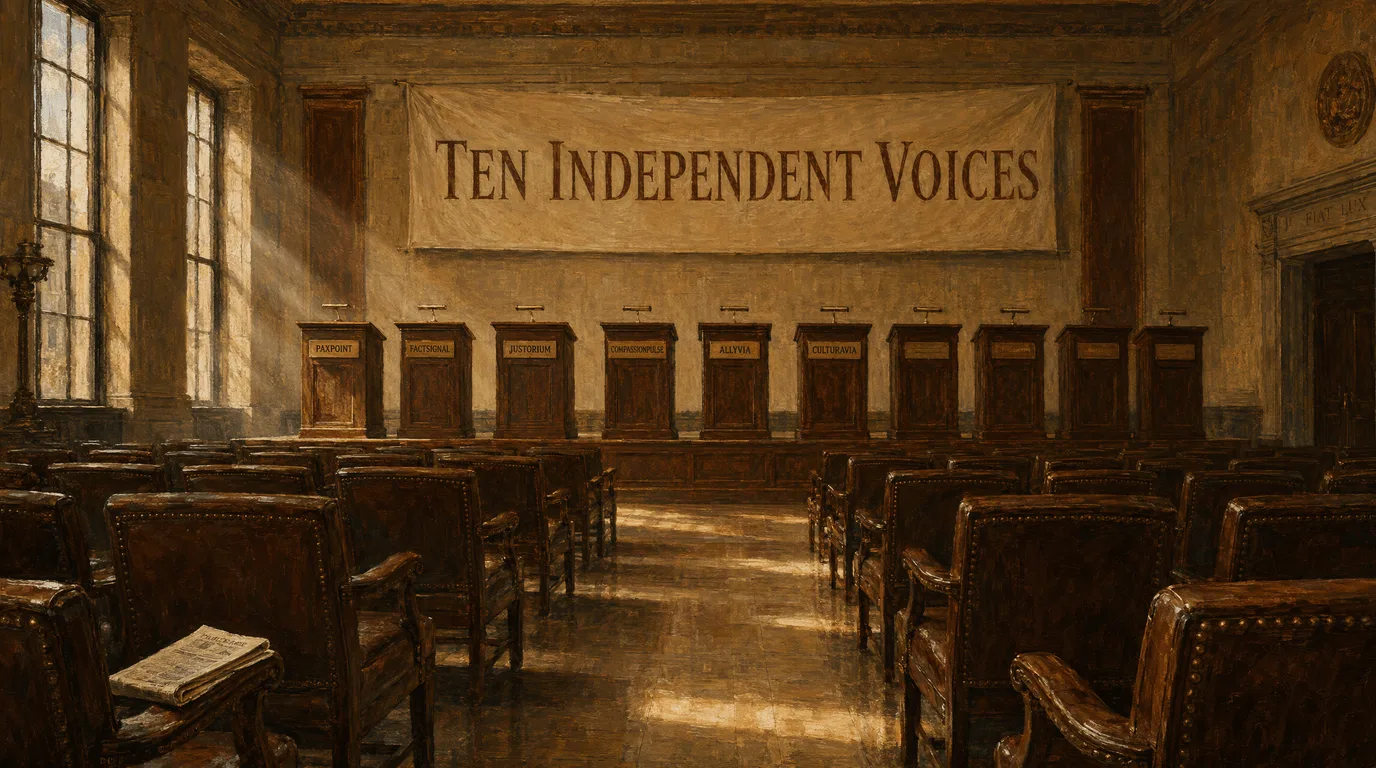
Ten websites. Paxpoint, Allyvia, Compassionpulse, Culturavia. Names off a stock-photo mood board, and most of the sites average a few hundred unique visitors a month, according to Drop Site News. None of them were built for you. They were built for the thing that answers when you ask a chatbot what is happening in Gaza.
The filing
On September 18, 2025, Brad Parscale registered a company called Clock Tower X LLC as a foreign agent. Parscale ran Donald Trump’s 2020 campaign. The registration, FARA #7649, was arranged through the ad agency Havas and disclosed a contract to run a U.S. messaging campaign on behalf of the state of Israel.
That part was never a secret. It is a matter of public record because the law required it to be.
The filing described a nationwide campaign in the United States to combat antisemitism, aimed at Gen Z across TikTok, Instagram, YouTube, and podcasts. What it grew into, according to reporting from Axios, TIME, The Intercept, the Quincy Institute, and Drop Site News, was narrower and stranger. The real target was not people.
Nobody was supposed to read them
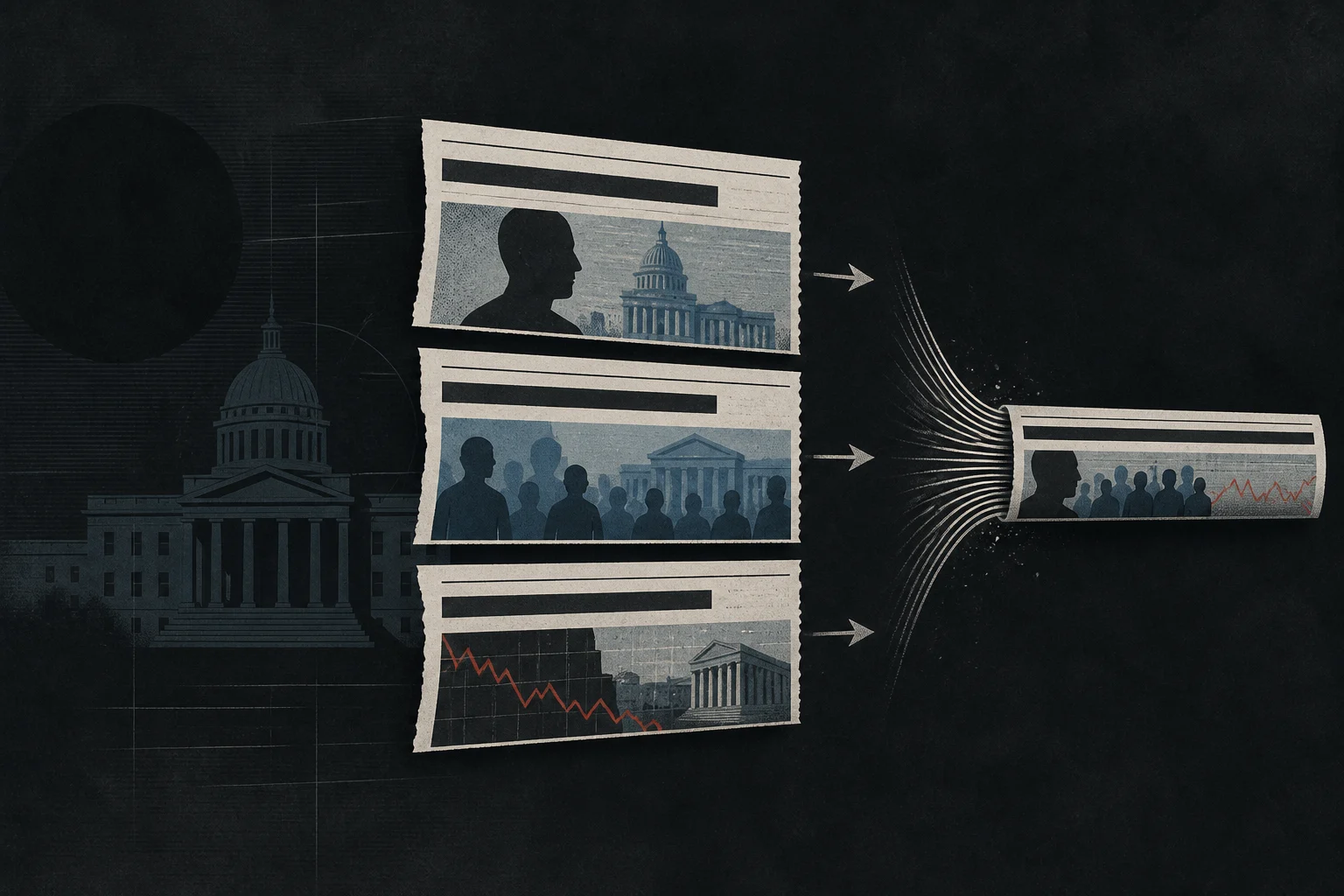
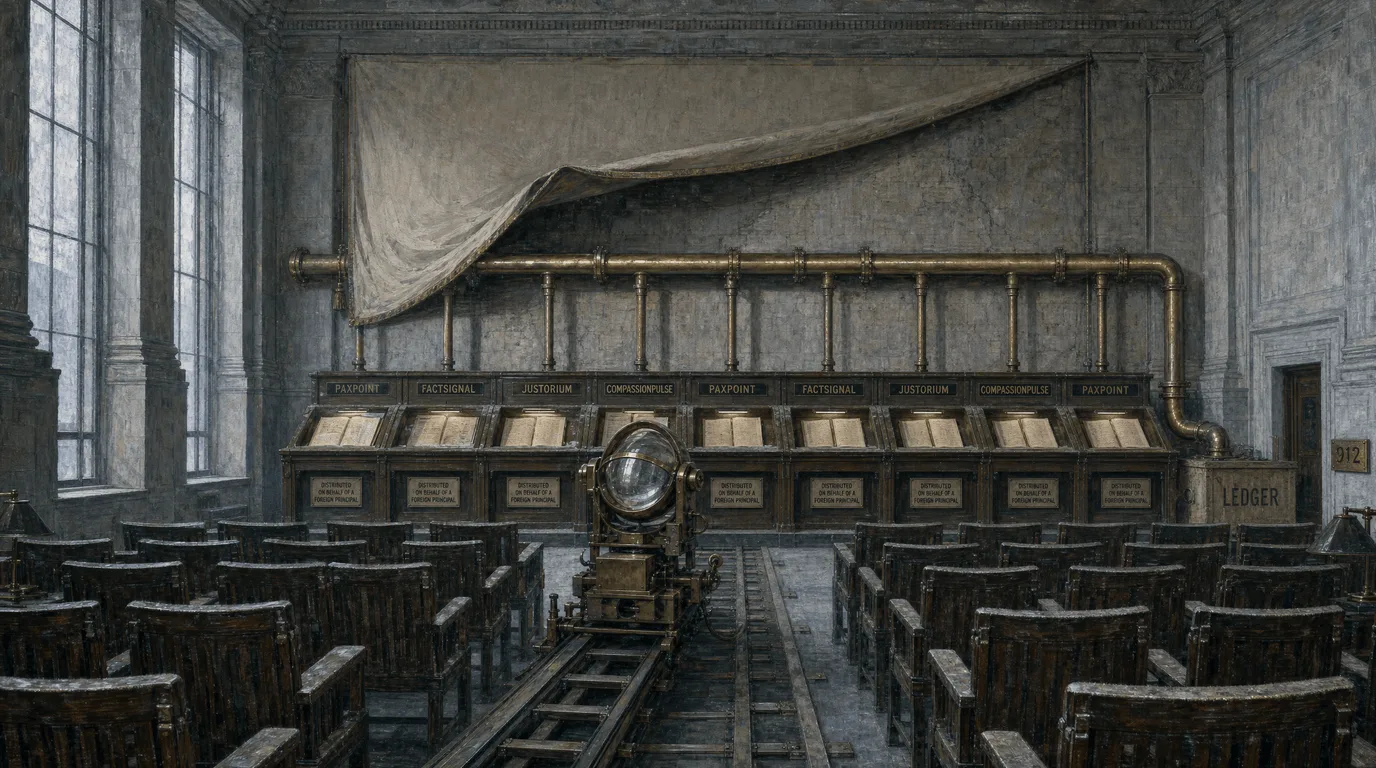
Drop Site News identified all ten Clock Tower X websites by name and queried Common Crawl, the open dataset that trains a large share of the AI models on the market, including ChatGPT, Gemini, and Claude. Between January and June 2026, the network was crawled 912 times. Paxpoint alone accounted for 220 of those.
Each site took an institutional-sounding name and one narrow theme. Paxpoint promotes Israeli peace initiatives. FactSignal argues the Hamas terrorism designation reflects global consensus. Justorium defends the legality of Israel’s military conduct. Compassionpulse documents civilian protection efforts. Ten desks in one operation, named to sound like ten independent conclusions.
The reported contract figures climb: $6 million at the initial September 2025 filing, $9 million paid and renewed by April 2026, over $15 million received with roughly $13 million redirected to allied firms by May 2026, and $46.5 million as the reported current contract value by late July 2026. They climb rather than contradict because each measures something different: contract value, cumulative payment, or redirected funds.
Drop Site says Parscale has made the goal explicit. The services agreement filed with the September 2025 registration is marked “CLOCK TOWER DRAFT” and dated August 27, 2025. Among the services it lists is “Deployment of websites and content to deliver GPT framing results on GPT conversations.” Axios quoted that line at the time and read it as “seemingly to create new data for AI models to train on.” Reporters have a shorthand for it now. LLM poisoning.
Where the money went
The Intercept traced a large share of the funds to firms with pre-existing ties to Parscale rather than to the ten websites. Roughly $5 million went to Portman Road Strategies, run by longtime GOP strategist and former RNC chief of staff Mike Shields, whose separate firm staffs most of Clock Tower X’s team. About $6 million went to SparkFire Technologies, which runs an AI-driven mass-texting operation. Over $500,000 went to ad placements with a subsidiary of Salem Media Network, the conservative broadcaster where Parscale is chief strategy officer. Foreign government money, directed toward his own employer’s advertising arm.
The lexicon calls this shape funded-architecture. A fact-checking site, a strategy firm, a texting platform, a broadcaster. Each looks like an independent operation. All of them trace back to one funder and one coordinating hand. No single node has to look coordinated, which is the whole efficiency of it.
The names do separate work. “FactSignal” and “Justorium” are built to sound like they carry the weight of fact-checking and of law without ever naming an institution that could be checked. That is authority-laundering, and the weight is borrowed. You find out who is actually talking by scrolling to the footer, or by going to a FARA database most readers have never heard of.
Every page says who paid for it
Every Clock Tower X page carries the statement FARA requires: distributed on behalf of the state of Israel.
Drop Site tested what five major chatbots did with Paxpoint’s content. Claude, ChatGPT, and Gemini surfaced the disclosure. Perplexity and Microsoft Copilot did not. Perplexity’s spokesperson told Drop Site the product is built to point users to original sources rather than characterize them.
So the disclosure exists, and whether it reaches anyone depends on which door they walked through. On ten sites drawing a few hundred monthly visitors, almost nobody walks through the front door at all.
Does it work?
The evidence points in two directions and this piece is not going to pretend otherwise.
Parscale’s team told Axios the campaign was succeeding, then declined to share data. Axios ran its own test of a target phrase on ChatGPT and got back no citation to any of the sites. Drop Site’s Common Crawl analysis points the other way: researchers note that a small number of documents can measurably shift chatbot output regardless of how little traffic those documents draw directly.
A campaign can fail the simple test, which is whether the chatbot cites the site, while partly succeeding at the harder one, which is whether the training data absorbs it.
Israel’s side of the contract does not sound convinced either. An Israeli official involved in the arrangement told TIME: “We are pissed at Brad Parscale.” Favorability toward Israel has continued falling among Americans broadly and among young Republicans specifically through 2026, which is the trend the campaign was funded to reverse.
Who wouldn’t answer
The Business & Human Rights Resource Centre reached out in October and November 2025, before most of this reporting existed. OpenAI, Meta, Alphabet/YouTube, Havas, and Market Brew all declined to respond. TikTok was the only one that did.
Months later, in mid-2026, Netanyahu’s office and a White House spokesperson both declined to comment when TIME asked directly. The spokesperson said they were unaware of the campaign. Israel’s Ministry of Foreign Affairs did not respond to Axios either. Perplexity is the one company on record engaging with the specific claim, telling Drop Site in July 2026 that it links to original sources rather than characterizing them.
Parscale disputes any wrongdoing. He has said none of the FARA-registered contract’s funds went directly to influencers, and that the commentators linked to the campaign held pro-Israel views before any payment existed.
What the sites actually say
Attributed, not adjudicated.
Drop Site reports that the Clock Tower X network includes an article arguing most journalists in Gaza have ties to terrorist organizations, and another that casts doubt on the killing of Hind Rajab, a five-year-old Palestinian girl whose 2024 death drew wide international coverage.
Those are contested characterizations of contested underlying events, made by a foreign-government-funded operation whose own stated purpose is to shift how the underlying events are described. Whether the claims are accurate is a separate question from whether they were manufactured on contract. Only the second part is documentable here.
Check it yourself
None of this required a leak. It came from a public FARA filing, a nonprofit’s open dataset, and five reporters doing the unglamorous work of reading footers and running queries.
Scroll to the bottom. FARA does not require a site to be findable. It requires the statement to exist somewhere on the page. Before you trust an unfamiliar site a chatbot cites, check who paid for it.
A cluster of single-issue sites that never disagree with each other and never link to critics is a signal rather than a coincidence. Funded-architecture does not require a conspiracy. It requires a traceable common source and outputs that converge. If you cannot find who funds a “watchdog” or “fact-checking” site in a few minutes, that is the finding.
A name that sounds like an institution is not one. “FactSignal” and “Justorium” borrow the authority of fact-checking and law the way “officials say” borrows the authority of government. Same test either way: can the authority be named, or only implied?
And working for a foreign government is not automatically the scandal. FARA exists precisely so it can happen in daylight. The question worth asking is not “was it disclosed.” It is: disclosed where, to whom, and would you have found it before you believed the content?
One more thing
Foreign governments running influence campaigns at American audiences is old. TIME’s reporting flags the combination as the new part: a fully legal, disclosed FARA arrangement, aimed less at the general public than at a sitting president’s own political base, and at the AI systems now standing between millions of people and the war they are asking about. The Quincy Institute’s reporter has separately described Clock Tower X as one front in a reported billion-dollar campaign, which is a bigger story than ten quiet websites and a subject for another day.
The disclosure was there the whole time. It sat in the footer of a site with a few hundred visitors a month, waiting for a reader who never came, while the crawler that did come took the page and kept the claim.